
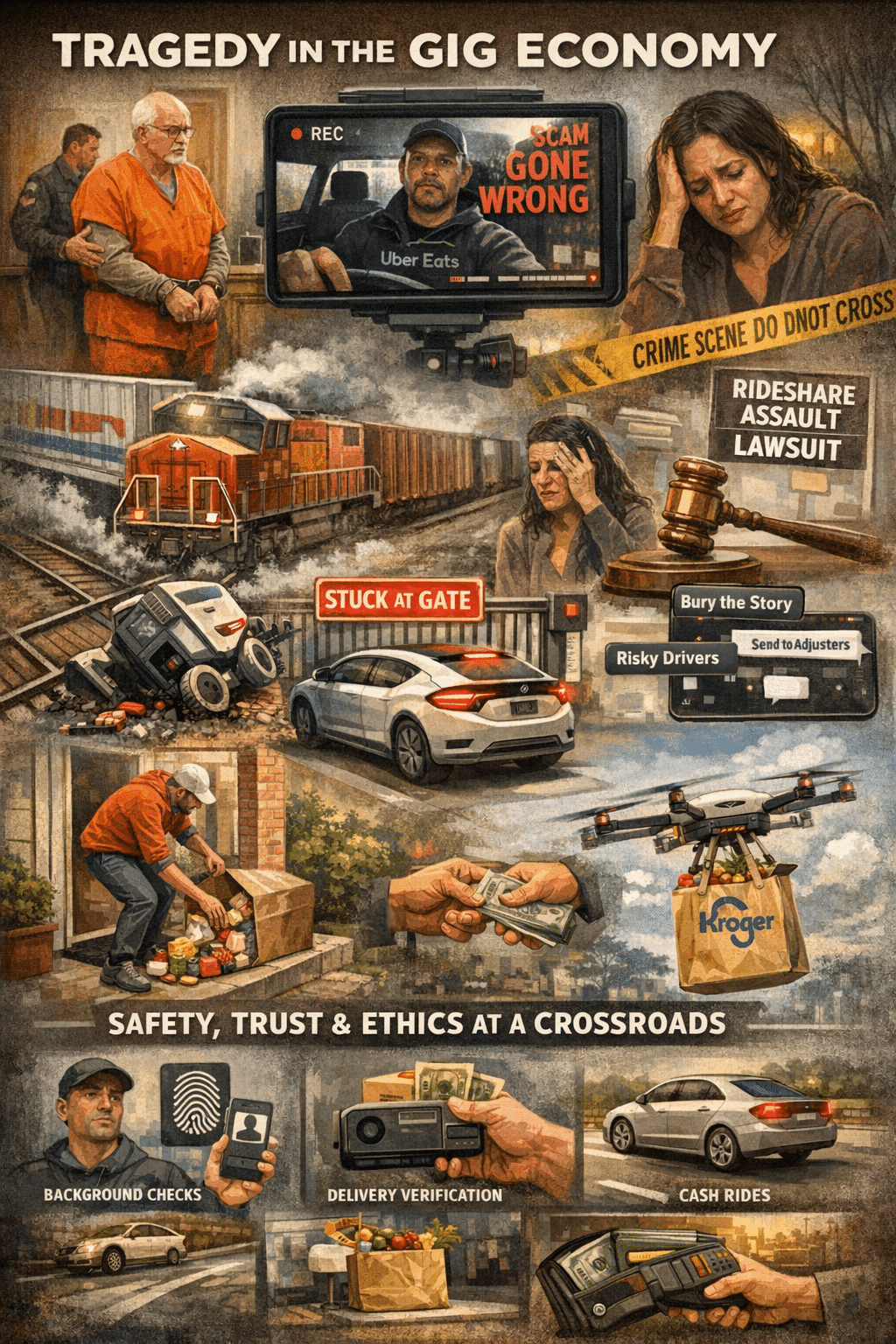
The gig economy promises convenience, speed, and flexible work, but this week’s stories reveal the cost when incentives, safety, and ethics collide. We start with a chilling follow-up: an 83-year-old Ohio man convicted of murdering an Uber Eats driver after both he and the driver were targeted by scammers. The dash cam evidence left little doubt, but the broader lesson runs deeper. Scam operations increasingly exploit delivery flows, convincing customers and drivers to act on fear. Drivers arrive at unfamiliar homes, while residents—already panicked—assume the worst. The result: tragedy that neither platform policies nor current safety tooling prevented. Education on scams matters, but so do structural safeguards: clearer package policies, courier verification cues for customers, and rapid escalation paths that flag scam patterns before they become deadly.
Safety failures weren’t limited to scams. A federal bellwether trial alleges widespread sexual assault by rideshare drivers and a corporate culture that downplayed reports. Internal messages—about “killing stories” and routing victim info to outside adjusters—erode trust. The legal strategy claims incidents were consensual or isolated; the human reality is that underreporting, thin background checks, and weak enforcement create a predictable risk environment. Real fixes will demand trade-offs: recurring, federated background checks (ideally fingerprint-based and portable across apps), faster deactivation thresholds when multiple credible complaints arise, and standardized in-car camera policies with privacy guardrails. None of these are cheap, but ignoring them is costlier—for victims, drivers, and the long-term legitimacy of rideshare itself.
Even the lighter stories pointed to design gaps and misaligned incentives. A viral clip showed a shopper casually dumping groceries at a doorstep, sparking the eternal tipping debate. But the core issue is quality control: ratings without accountability produce performative compliance, not care. Platforms tout training badges; what works better is item-level photo proof, pattern detection for mishandling, and tighter removal policies for repeat offenders. On the tech frontier, we watched a delivery robot get obliterated by a train and a Waymo stuck at a gate it wouldn’t approach. Autonomy excels on predictable roads; it falters at edge cases like sensors misreading gate proximity or geofencing around tracks. These shortcomings aren’t fatal to the tech, but they demand more robust policy and environment mapping—especially in dense residential complexes.
Amid all this, Uber announced a major expansion with Kroger and affiliated banners, plus renewed talk of drones. Partnerships promise reach; reliability requires disciplined logistics. Shoppers and drivers feel the friction when orders sprawl across categories like sushi, floral, and groceries with tight windows. Drone promises still lag real deployment; until then, stable pay, accurate ETAs, and clear substitution policies move the needle more than splashy pilots. Finally, we tackled “hood Uber” cash rides—cheaper for riders and riskier for everyone. No insurance, no identity trail, no platform protections. It’s a symptom of weak transit options and high app pricing, but the fix isn’t riskier rides; it’s lower-cost tiers supported by verified identity, or community transit solutions that actually meet late-shift demand.
The gig economy thrives on trust: the trust that a courier is who they say they are, that a rider gets home safely, that groceries arrive intact, that a robot won’t stall at a gate or die on the tracks. Trust isn’t a slogan; it’s a system. Stronger verification, portable background checks, clear removal thresholds, smarter autonomy logic, and true customer-driver support will rebuild it. Until then, drivers should run dual dash cams and avoid non-platform cash rides; customers should verify couriers and avoid engaging with unsealed home-made items; and platforms should prioritize safety signals over PR wins. Convenience brought us here; credibility will decide what survives.