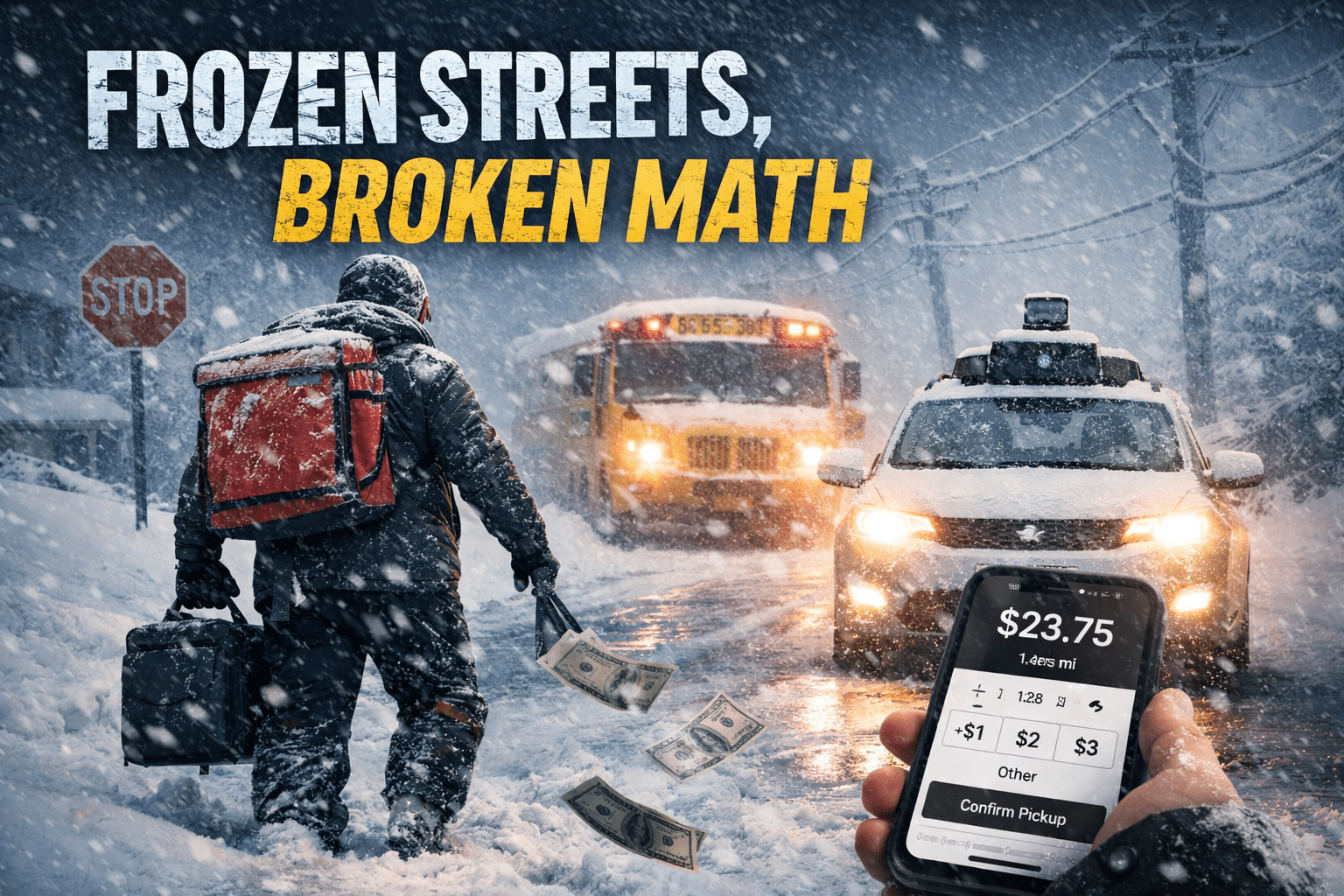
When winter locks down roads and routines, gig work doesn’t stop—it mutates. This episode dives into what happens when a deep freeze collides with delivery apps, driver safety, and policy shifts that ripple across markets. We open with a region-wide ice event that stranded families for days and flattened demand midweek, then spiked it on clearer weekends. That weather window illuminates a harsh truth: drivers who plan for downtime and gear for storms can choose when to work; those who don’t feel forced into risky shifts for modest bonuses. The storm becomes a backdrop for bigger questions about sustainability, personal safety, and the invisible costs of staying on the road when everything else shuts down.
From there we pivot to taxes and the messy reality of platform reporting. Despite political talk of not taxing tips, many 1099s still lump tips into total earnings, leaving drivers without a clean way to claim distinctions unless apps provide detailed summaries. Uber’s annual tax summary breaks out tips, while others—Lyft, Spark, and frequently DoorDash—often don’t. That inconsistency fuels a larger debate about transparency: if platforms expect contractors to manage complex taxes, expenses, and compliance, the data must be precise, consistent, and easily exportable. For gig workers, keeping thorough records, capturing mileage, and bookmarking annual summaries is no longer optional; it’s how you keep money in your pocket.
Transparency shows up again in New York City, where a court let stand a law requiring apps to recommend a minimum 10% tip and to present clear tipping options. The platforms warned about speech rights and business harm; the court disagreed. The real impact is market design: when apps must spotlight tipping while also paying local minimums, the old math of low base pay plus hidden tips breaks. In high-cost cities, guarantees sound great, but they often coexist with scheduling, quotas, or slower markets. If you don’t drive there, it’s tempting to cheer new mandates. If you do, you watch how each rule shifts availability, pay floors, and the fine print that changes your day.
Autonomous vehicles threw more questions on the pile. Reports from Austin show Waymo cars allegedly passing active school bus stop arms even after a software “fix,” with dozens of flagged incidents and kids in frame. Another clip shows a Waymo nearly colliding as it pulls from the curb right into traffic. It’s a reminder that scaling robotaxis requires mastering edge cases humans consider basic: stop arms, blind spots, and courtesy pauses. AV backers tout millions of safe miles; critics point to a single near-miss that erodes public trust. For gig drivers who see autonomy as competition, these failures are a reprieve. For cities, they’re a liability problem waiting to hit court dockets.
Meanwhile, Amazon is recalibrating retail. With Go and some Fresh locations shrinking while Whole Foods and delivery expand, a new “big box” concept raises eyebrows. Why drive to a store to buy what one-click already sends home? The only compelling answer is experience and immediacy: curated shelves that match local demand, in-store tech that speeds checkout, and integrated grocery that fulfills delivery within hours. If Amazon pairs a large-format store with fast last-mile, drivers see more predictable batches and neighborhoods get shorter ETAs. If it’s a showroom without clear utility, expect blight where big promises were made.
We closed with the human side: DoorDash shut down in icy regions and added a $2 weather fee elsewhere, prompting the usual outrage. Surge-like fees are fair when risk and time multiply, but fees alone don’t change physics. The smarter play is preparation: winter tires, basic recovery gear, waterproof boots, extra windshield fluid, and a savings buffer so “no-go days” don’t wreck your budget. And when customers don’t shovel, you can still be professional: communicate ETAs, stay safe, and decide if that no-tip order is worth a thigh-deep trudge. In gig work, transparency, planning, and boundaries are the only guarantees you can control.