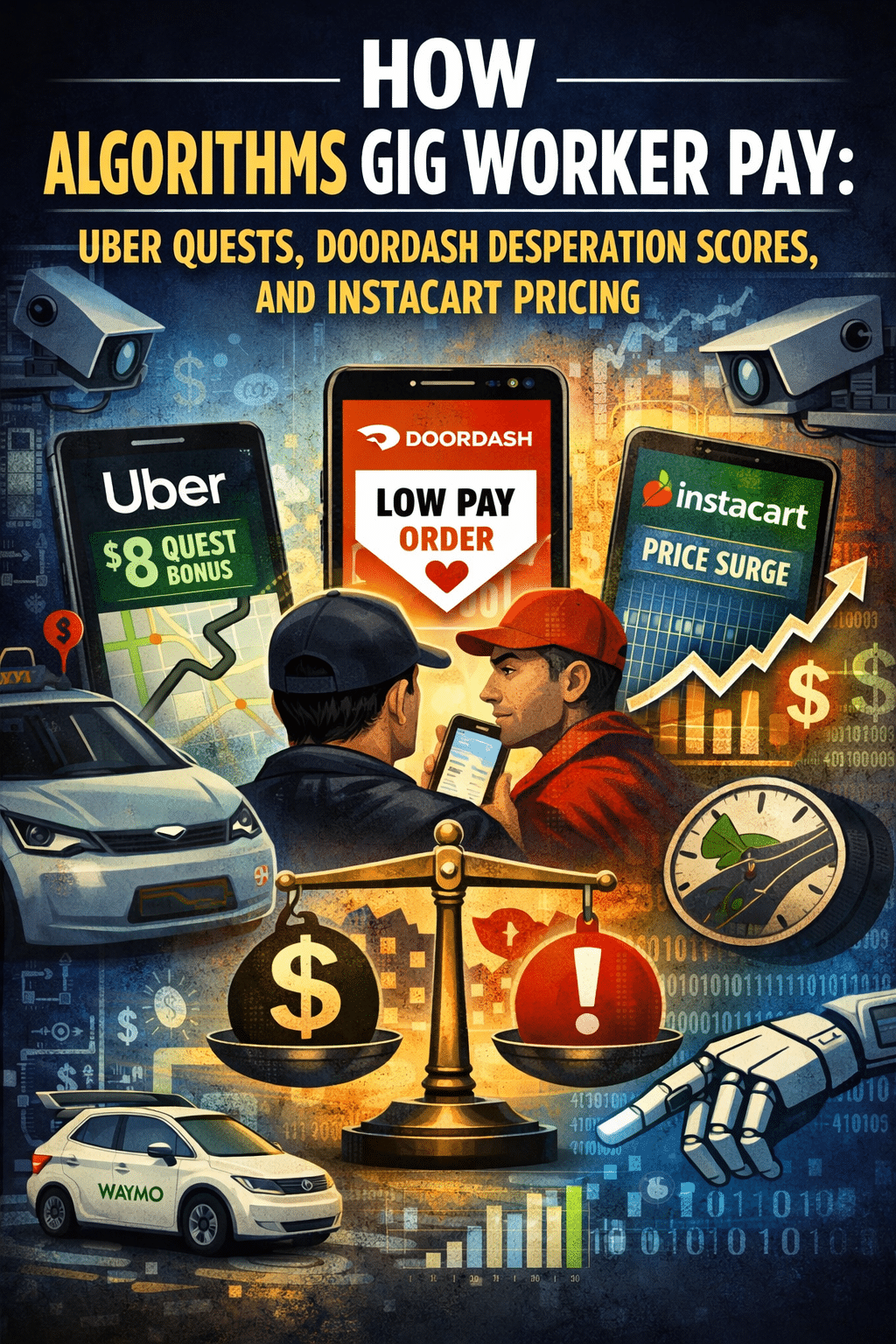
The conversation opens with a ground-level reality check: incentives move behavior, and when they disappear, so does supply. An Uber ride quest paying an extra eight dollars per trip pulled a driver through a slow holiday market, yet similar carrots on Lyft have gone missing for months. Meanwhile, Walmart’s Spark incentives show up almost daily except on New Year’s Eve, when workloads spiked and bonuses mysteriously vanished. That inconsistency leaves drivers weighing dead miles, long returns from small towns, and whether a $30 fare plus a small quest kicker truly beats a day of stacked shop-and-deliver orders. The theme is simple but powerful: on-demand labor follows incentives, and when platforms misalign them, workers don’t show up.
The show’s centerpiece is the DoorDash “desperation score” rumor: a Reddit-claimed internal metric using driver behavior to tune pay. Verified or not, it hits a nerve because algorithmic steering already shapes who sees which orders and at what price. The hosts split the hair between efficiency and exploitation—if a platform routes low-paying offers to drivers who accept anything, is that good operations or a moral breach? The line is blurry. Add in Instacart’s reported price testing and faint political thunder for regulating algorithmic pay, and you get a looming policy question: when does optimization become manipulation? The takeaway lands somewhere pragmatic—capitalism is fine, secrecy is fine, but not if it buries harm to workers.
Operational absurdities keep surfacing. A McDonald’s weighing orders to curb “theft” sounds like rigor until you recognize most missing items are simple errors under time pressure. Still, standard weights for bags could create accountability where audits keep failing. Then there’s consumer behavior: “wrapped” summaries from Uber and others risk backfiring by forcing people to face how often they order delivery. Seeing 130 orders a year, or weekly coffee at full price, jolts habits. Platforms want stickiness, but transparency can drive self-correction, especially as fees and tips push average tickets into the $30–$40 range.
Hardware and partnerships are shifting too. Octopus pivoting to Uber Journey TV points-only for Uber trips drains value for Lyft-heavy drivers and trims the mini-economy of in-car games that once encouraged engagement. It’s a reminder that platform exclusivity rarely benefits workers. On the vehicle side, trucks are quietly becoming Swiss Army knives of gig work: hauling furniture, towing, and oversized deliveries. With many owners logging 10+ hours a week, real margins come down to fuel math and smart routing, particularly as EV bets wobble and battery plants retool toward data-center demand instead of cars.
Automation feels both promising and fragile. A Waymo stopping at a red and then rolling into an illegal right turn underlines how brittle edge-case logic can be. Worse is the stowaway caught in a trunk—proof that autonomy needs physical security checks, door-state verification, and better live monitoring. Trust requires more than clean disengagement charts; it needs safety protocols for the messy human world. That same human mess shows up in petty fraud too, like a delivery driver dragging a bag away by string after snapping a photo. It’s almost comic, until you remember every scam erodes consumer patience and driver credibility.
Finally, discovery itself is becoming an AI product. DoorDash’s Zesty app aims to recommend real places with social proof and chat prompts tuned to mood and context. If it resists pay-to-rank pressure, it could beat the noise of generic review sites by learning taste, not just stars. That’s a useful idea in a market where convenience won, costs spiked, and trust got complicated. The through-line across all these stories is alignment: incentives that match effort, transparency that informs without shaming, automation that’s secure, and discovery that respects taste over ad spend. When those align, gig work can be both profitable and humane.