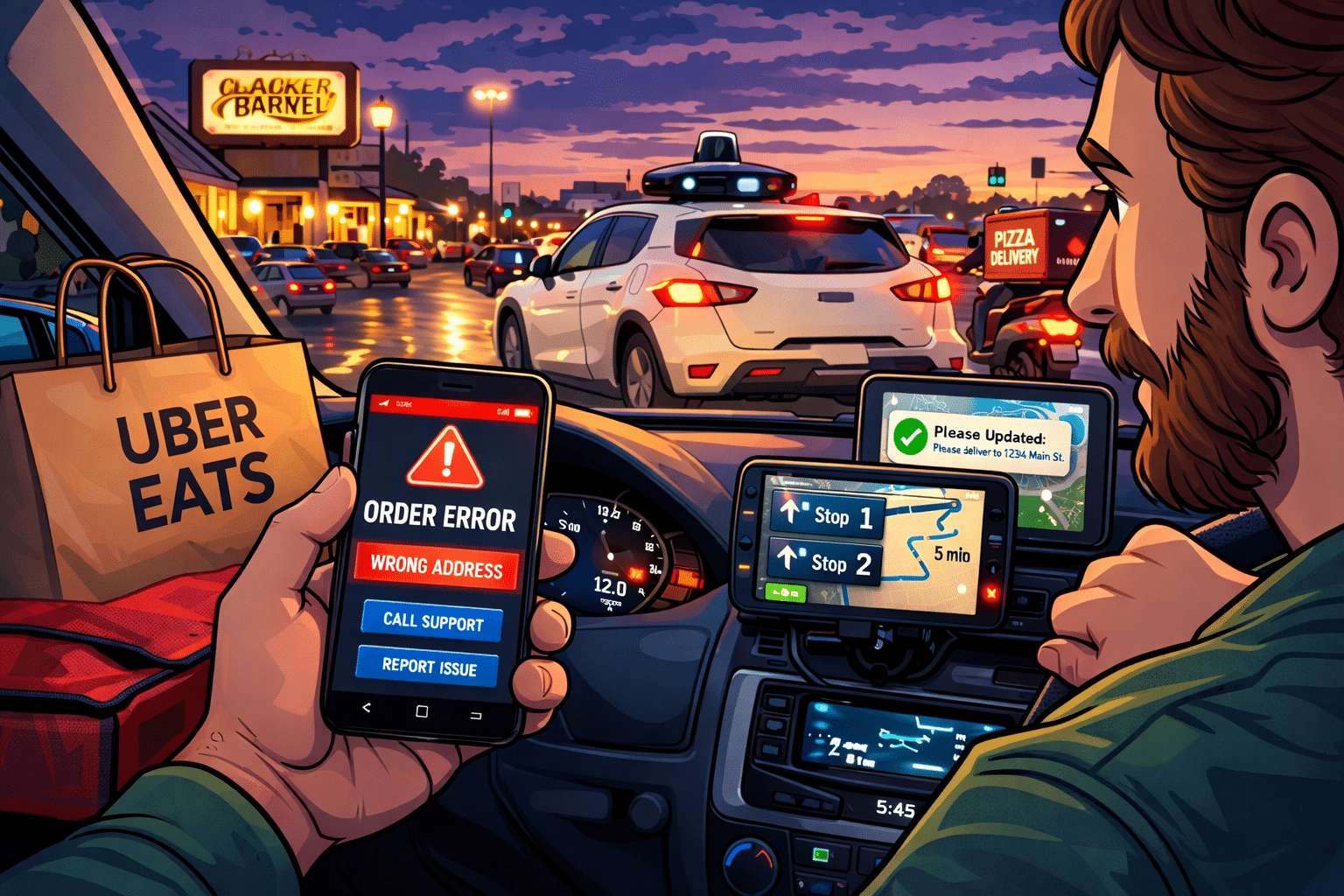
The strange reality of gig work is how routine chaos becomes. A warm winter day turns into a Telegram voice rant about a Cracker Barrel parking lot and, minutes later, a story about an Uber Eats double-order going sideways because a third-party system like Toast fed the wrong address back into the app. That whiplash is the job. Drivers juggle food delivery, rideshare, and retail pickups across time windows that rarely line up, and when a platform glitch reroutes a pizza you already delivered to a second, different address, you get stuck arguing with support to reverse fees and protect your ratings. The lesson is painfully simple: document everything, screenshot every step, and speak in short, clear statements when support gets confused. You might still lose some payout, but you’ll often salvage tip guarantees and reduce the odds of a deactivation when the software—not you—breaks.
Valentine’s week throws that mess into sharp relief. Morning demand is dead, then the evening explodes with stacked orders that leave the first meal sweating in the bag while you race to pick up the second and third. Substitutions at big-box stores become a mini negotiation in your DMs, where the customer who ordered last-minute wants a different color bear and a perfect bouquet that no longer exists. This is where experience pays: make the best swap you can, keep replies short, avoid long back-and-forths that stall you at the store, and manage expectations with a calm update on the drive. Tips often reflect composure more than perfection. Some nights the smallest deliveries tip up after the fact; other nights a $26 payout shrinks when a canceled leg wipes out the bigger gratuity. The numbers average out, but only if you keep moving.
Security and identity sit in the background until they don’t. Getting a 1099 for income you never earned is a sickening way to learn your information is in the wild. Support channels are slow, but you can protect yourself: freeze your credit at all three bureaus, use strong unique passwords, and enroll for the IRS Identity Protection PIN, which refreshes annually and stops fraudulent tax filings using your SSN. It’s not glamorous, but it’s simpler than cleaning up after a bogus account runs rides under your name. Pair that with routine checks on your insurance status and an understanding of what your platform covers during each phase of a trip. When policies shift by state or city—especially in heavy-regulation markets like New York—drivers need to know if commercial coverage is required and who pays for what when a gray-area app enters the scene.
Convenience culture is the bigger story. Food delivery is frictionless, but fees add up fast: small orders, big markups, cold entrées after multistops, and a monthly tab that can rival a car payment. For drivers, that demand funds the night, but it also fuels a cycle where some customers deliver to pay off what they spent ordering. The economics can feel upside down. When a platform hires gig workers to close a robotaxi’s open door for an extra $5 on a micro task, you see how far “anything-on-demand” has stretched. We’re closing luxury car doors from a dashboard while debating if an $11 payout for 0.7 miles is worth it. It is absurd, sure, but also a preview: autonomy will coexist with humans doing tiny, paid interventions around the edges for a long time.
Automation anxiety keeps creeping in. A Waymo on the wrong side of the road is more than a glitch; it’s a reminder that neighborhood speeds are forgiving, but highway mistakes are not. The support escalation path matters when there’s no driver to override the wheel. If the help line can’t hear you, your best safety move may be to end the ride. We can argue that highway driving is simpler than city streets, and often it is—fewer variables, clearer lanes, easier mapping—but the margin for error at 65 mph is thin. For now, human judgment remains the safety net that platforms quietly rely on, whether you’re closing a door, triaging a misroute, or deciding when to walk away from a sketchy call.
Underneath the jokes and rants is a practical code: keep records, protect your identity, understand your insurance, and value your time. If a $14-per-hour scheme requires you to accept every ride in a rental, run the math on gas, time, and upside—you probably have better options. If a catering app pauses in your state due to legal fog, diversify with a backup platform so your week doesn’t vanish. And if you’re tempted to place a third delivery order this week, maybe cook once and tip a little extra the next time you do tap the app. Gig work runs on small, everyday decisions—by riders, customers, platforms, and drivers—that either compound into stress or stack into a steady, livable flow.