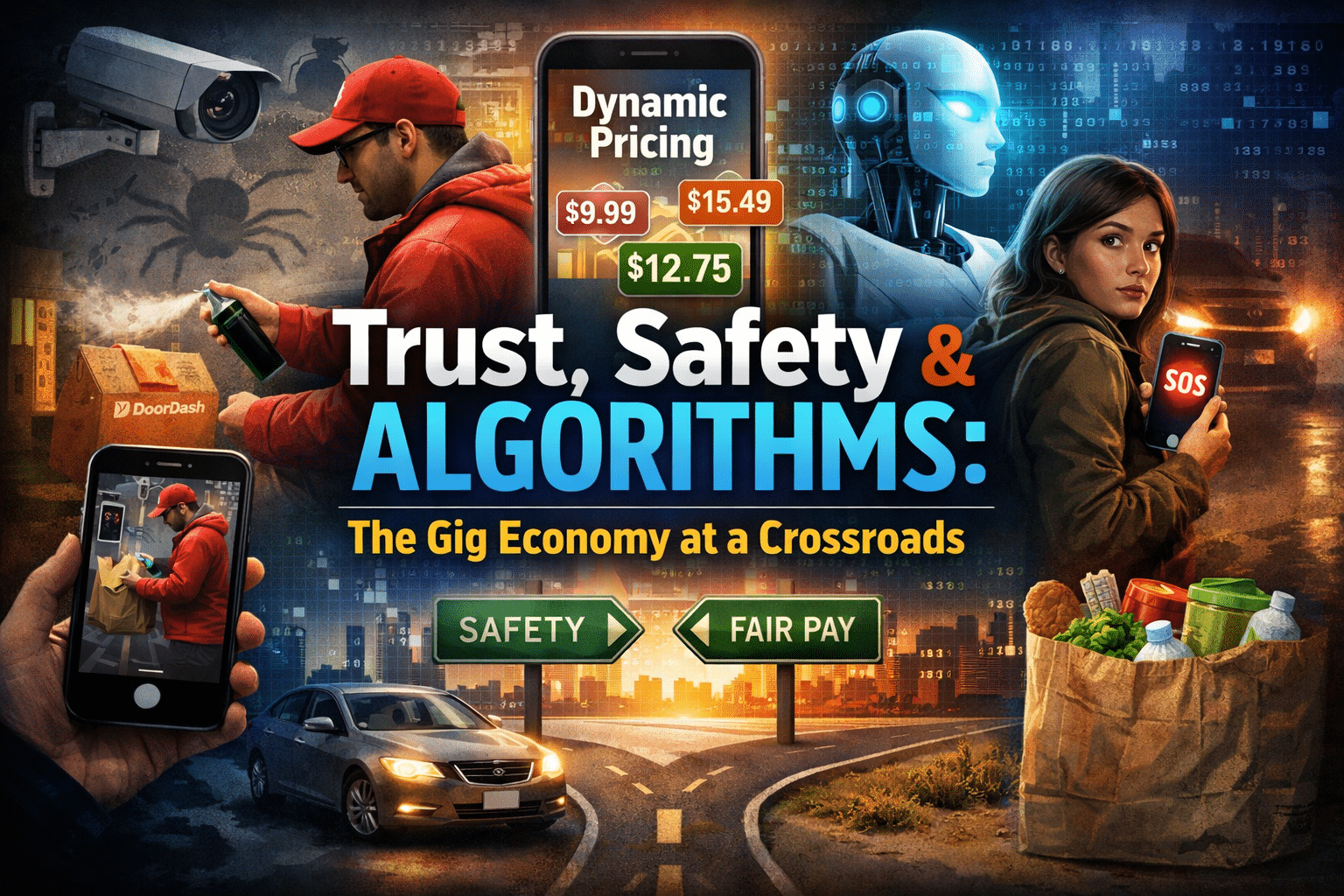
The gig economy thrives on flexibility, speed, and trust. That trust was tested by a viral delivery clip showing a DoorDash driver spraying a customer’s bag, then blaming a spider. Beyond the shock, the moment exposes two realities: first, the public’s reliance on cameras as truth-tellers; second, how fragile customer confidence becomes when a few bad actors poison the well. We discuss why platforms should respond with decisive bans, shared safety signals across apps, and clearer escalation paths for customers and workers. Punishing deliberate harm protects everyone and raises the bar for professional standards without crushing genuine, hardworking drivers.
That story flows into a larger discussion on safety. Delivery and rideshare can be isolating and dangerous, with incidents ranging from carjackings to abductions. Features like in-app location sharing and check-ins help, but they often act too late. Real safety lives in proactive habits: controlled approach to doors, avoiding blind entryways, keeping distance at thresholds, scanning for cameras and lights, and trusting gut signals. For women working nights and anyone delivering to unfamiliar areas, small rules—like sending a quick ETA to a trusted contact, sticking to well-lit drop spots, and avoiding enclosed porches—stack up to real protection. On platform side, faster “SOS” routing, tighter verification, and cross-app bans for violent behavior would deter predators who hop between services after suspensions.
From safety to pricing, we unpack Consumer Reports’ findings on Instacart’s AI-enabled pricing, where the same items can cost different amounts for different users. That’s dynamic pricing migrating from rideshare to groceries. It’s not just surge; it’s behavioral pricing based on patterns, location, and willingness to pay. The result is confusion, distrust, and a sense that the ground is moving under customers’ feet. Transparency is the cure: standardized price bands, receipts showing store price vs. service premium, and clear explanations of fees. If the algorithms know you, you deserve to know the rules. It’s better business, too—few things erode loyalty faster than guessing games at checkout.
We also examine how AI assistants might overwhelm siloed apps. Imagine telling a smart browser to “find the lowest total cost, fastest delivery for this list,” and it comparison-shops stores, fees, and couriers in seconds. That could de-rank overpriced platforms and elevate nimble local options with fair pricing and solid reviews. For workers, it could redirect demand to the places that pay consistently and don’t play shell games with tips. But there’s a catch: AI tends to “agree” with the prompt. You need to ask the right questions—total cost vs. base price, speed vs. reliability, and safety of pickup points—so the results serve your real goals, not just the cheapest line item.
Policy fights in New York add fuel to the tipping debate. If tips move post-delivery and become less prominent, earnings fall toward the guaranteed floor, not the historic averages. Pre-checkout tip prompts with clear defaults keep the social norm intact and stabilize pay. Over time, the platforms will chase clarity and trust because those win customer and worker retention. The bolder proposal we explore is city-level limits on active drivers to reduce oversaturation, lift offer quality, and reduce data costs—potentially allowing higher per-order pay. It’s controversial, but a pilot could reveal whether scarcity leads to healthier pay without crushing access.
Finally, the human piece. Gig work can feel lonely. Community spaces—Telegram groups, live streams, and Patreons—give people a place to swap routes, vent about bad nights, and crowdsource fixes. That support turns a solitary grind into a shared craft. Whether you’re navigating late-night drop-offs, rejecting bad substitutions, or testing new AI tools, a trusted circle makes you smarter and safer. Pair that with realistic expectations about earnings, strict personal safety rules, and a healthy skepticism of algorithmic fog, and you’ll build a durable gig playbook for 2025.