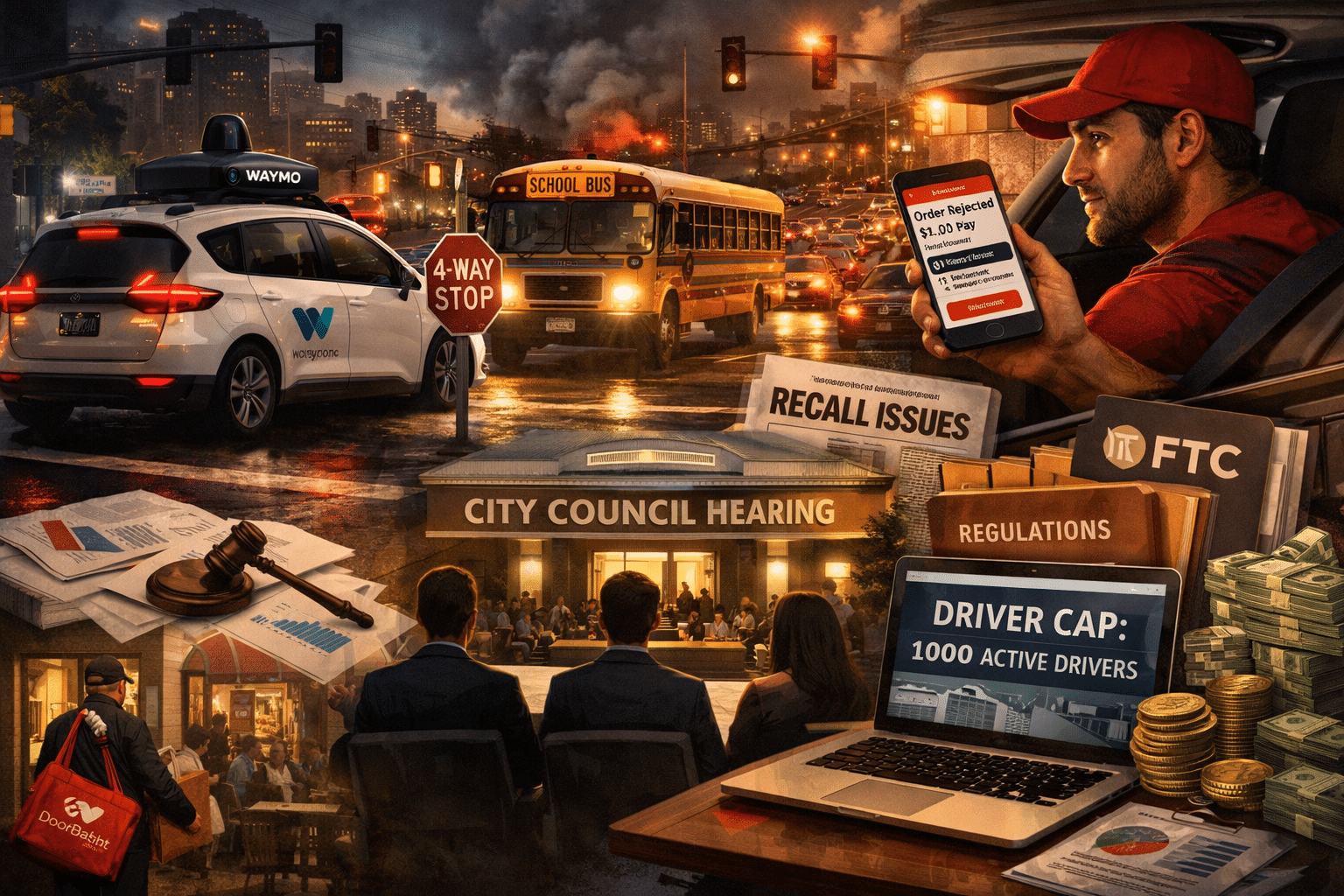
The year’s end brings more than holiday traffic for gig workers; it is exposing where the system bends and breaks. The conversation opens with the surge of Waymo vehicles and a sobering look at autonomy’s readiness for real streets. Recalls over school bus behavior, gridlock during power outages, and odd passing maneuvers reveal a gap between glossy PR and practical safety. If an autonomous car cannot treat a dark intersection like a four-way stop, confidence collapses. That’s not just a tech story; it spills into public trust, regulatory scrutiny, and insurance realities. The panel argues that self-insured fleets, guarded data, and courtroom wins over disclosure don’t substitute for robust performance in messy cities where liability is human, not hypothetical.
From there, the topic shifts to an overlooked lever: data. Every rejected $2 order pushed to fifteen drivers costs real money in compute, routing, and marketplace churn. With “Dash Now for all” rolling out, oversaturation may spike, and the cost to process bad orders could rise as markets flood with new on-demand drivers. The proposed remedy is controversial but clear: cap concurrent drivers dynamically. If a city needs 700 active drivers at peak, allow 1,000, not 1,800. Real-time entry would free a spot when someone swaps to another app. Fewer idle vehicles means cleaner data, lower routing overhead, and space to improve base pay. It also cools neighborhood congestion and wins points with city councils sensitive to traffic, emissions, and curb chaos.
Skeptics ask if platforms would pass savings to drivers. The answer may be political as much as economic. 2026 looks like a litigation year, with multi-state actions and FTC scrutiny pushing platforms to show good faith. A cap reduces noise in the marketplace, lowers failed dispatch loops, and signals responsibility to regulators. Meanwhile, waitlists can prevent false hope for new entrants who are unlikely to earn in saturated zones. For part-timers, smarter access—rather than unlimited access—could mean better odds when they actually log on. Hard choices beat a slow drift where nobody wins: customers pay more, restaurants give up margin, drivers chase scraps, and platforms burn trust.
Then comes a real-world pivot: a Boulder restaurant group pulled menus from the big apps and routed ordering through their own sites, while still using DoorDash drivers for fulfillment without handing DoorDash the fees or payment flow. It’s direct ordering with third-party delivery, clear menu pricing, a simple delivery fee paid to drivers, and tipping transparency. Is it scalable? Maybe not everywhere. But in markets where brand loyalty and local culture are strong, it can reset expectations: no mystery markups, better driver pay per trip, and restaurants keeping their margins. If replicated in similar college towns like Ann Arbor, a pattern could form: premium independents reclaim ordering while tapping a flexible driver network for last mile.
Alongside these structural shifts, the path to earnings is evolving. Multi-apping, private ride clients, catering blocks, and B2B deliveries build resilience as single-app dependence fades. The panel is blunt: many drivers who once thrived full-time are working fewer nights or pivoting to higher-value niches. Education matters—understanding your market, hours, and mix. The learning curve is steeper than it looks from social media highlights. Discipline, customer nuance, and vehicle cost control separate sustainable income from burnout. A smarter, leaner network with fewer idle drivers, clearer pricing, and direct-order channels could stabilize an ecosystem that has run hot for too long.
Ultimately, the takeaway is pragmatic. Autonomous vehicles won’t rescue delivery economics soon; the tech still stumbles on basics. The marketplace needs intentional design: fewer wasted pings, better base pay, and credible transparency that restores trust among cities, restaurants, and drivers. Dynamic caps, waitlists, and direct ordering are not silver bullets, but they are tools with leverage. As lawsuits and policy pressure mount, platforms can either let courts force their hand or choose reforms that actually make service better. The gig economy thrives when the flywheel spins cleanly—orders priced fairly, drivers paid reliably, and cities freed from perpetual congestion. That future is possible, but only if we stop pretending the current noise is normal.