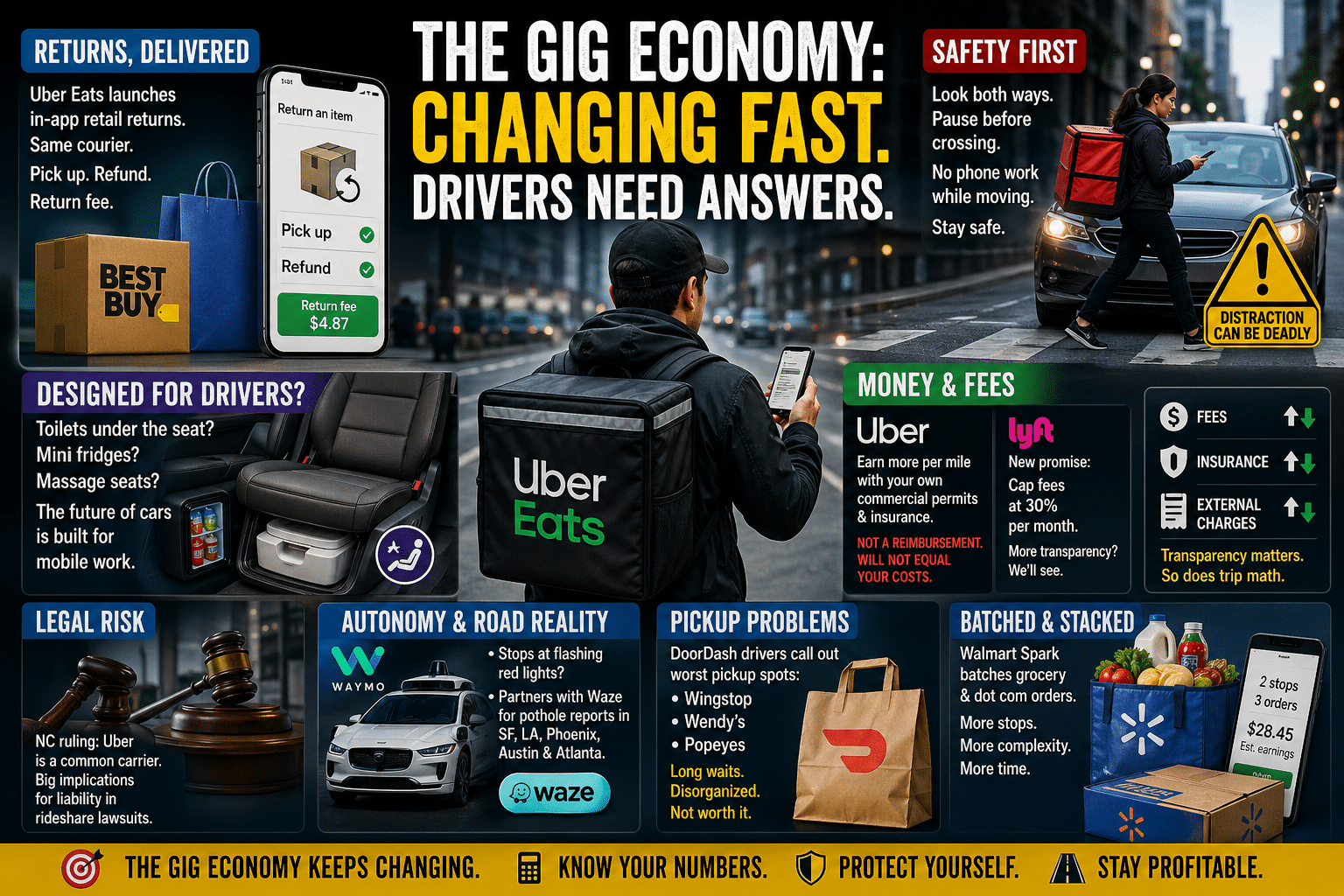
The gig economy keeps reinventing “convenience,” and this week’s news shows how fast delivery and rideshare companies are trying to become an all purpose logistics layer. Uber Eats rolling out in app retail returns is a big shift for on demand delivery: the same courier network that drops off a Best Buy order can now pick it back up, trigger a refund, and charge a return fee based on time and distance. For customers, that’s frictionless shopping. For gig workers, it raises the usual questions about pay, mileage, and whether these new tasks become another low transparency earnings category inside the Uber ecosystem.
Safety is the other side of the gig economy reality, and it’s impossible to ignore when you see a delivery driver struck while crossing in front of her vehicle. Delivery drivers, Amazon Flex drivers, and UPS style routes all share the same hazard: distraction at the exact wrong moment. Earbuds, texting, scanning the next stop, or watching a screen while stepping off a curb turns a routine drop off into a serious crash risk. The practical takeaway is simple but hard to follow on busy nights: look both ways, pause before crossing, and keep your phone work for when you are stopped, not moving.
Not every story is grim, but even the funny ones reveal real pain points. A Chinese automaker filing a patent for an in vehicle toilet under the passenger seat sounds like a joke until you remember how often drivers resort to Gatorade bottles and “thirsty goose” solutions. The conversation quickly turns from novelty to the realities of long routes, limited restrooms, and the constant push to stay online. Add a mini fridge, built in massage seats, and other car tech, and you can see where vehicle design is starting to cater to mobile work, not just commuting.
On the money side, platforms keep experimenting with how they classify costs and incentives. Uber’s message about earning more per mile with your own commercial permits and commercial insurance reads like a bonus, but the fine print matters: it is not a reimbursement and will not equal your costs. That changes the calculus for full time rideshare drivers considering private rides or commercial coverage. Meanwhile Lyft’s promise to cap its fee at 30% per month aims at the biggest driver complaint: transparency. When fees, insurance, and “external charges” move around, drivers can’t accurately price their labor or decide which trips are worth it.
Legal risk and automation also loom large. A North Carolina ruling treating Uber as a common carrier highlights how state law can shift liability in rideshare lawsuits, even years after an alleged incident. At the same time, Waymo’s autonomous vehicles provide a stream of real world edge cases, from stopping incorrectly at a flashing red light to partnering with Waze for pothole reporting in cities like San Francisco, Los Angeles, Phoenix, Austin, and Atlanta. It’s a reminder that the future of work includes both more data and more uncertainty. Add DoorDash drivers calling out worst pickup restaurants like Wingstop, Wendy’s, and Popeyes for wait times and operational chaos, plus Walmart Spark batching grocery and dot com orders, and the big theme is clear: gig work keeps changing, so drivers need sharper boundaries, better trip math, and safer habits to stay profitable.