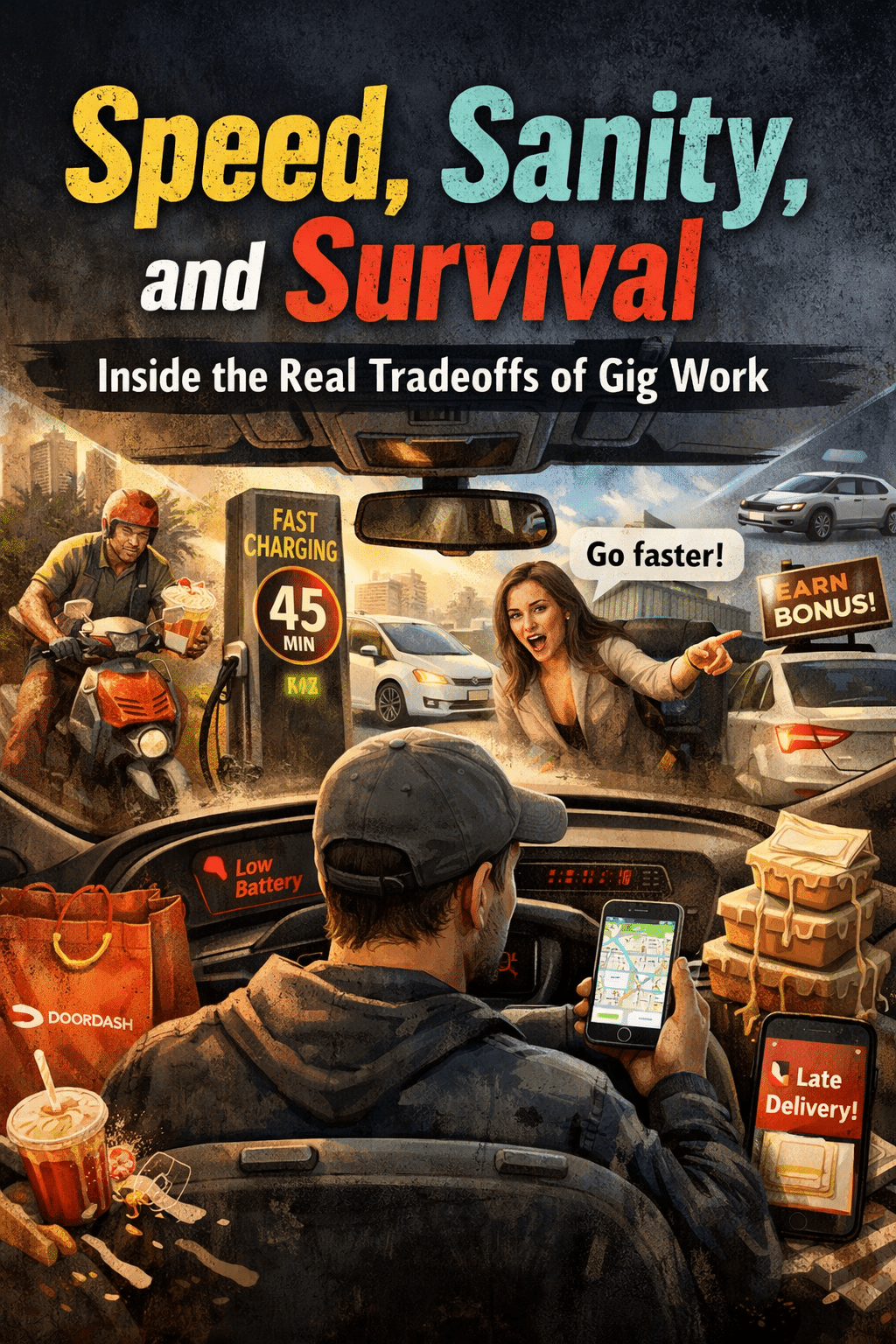
Gig economy work is a constant trade between speed, cost, and sanity, and this conversation starts where drivers live every day: the unpredictable human side. From riders oversharing life stories to passengers demanding you “go faster” at a red light, rideshare and delivery drivers end up doing customer service, conflict management, and logistics all at once. We also dig into the stacking problem on DoorDash and Uber Eats, where doubles and triples can turn a simple order into a late, half melted mess. If you have ever watched a shopper “checking out” forever, you know how platform batching can punish the customer and the driver at the same time.
Electric vehicles are the next big shift in rideshare, and Uber’s expanded EV grant puts real money on the table. We break down what that looks like in practice: savings of roughly seven to nine dollars a day on fuel can be real, but the hidden cost is time spent fast charging, often close to an hour across a long shift. That time cost matters even more if you are grinding quests or bonuses and need constant uptime. We talk charging strategy, why Level 2 home charging changes everything, and how cold weather, highway speed, and charger availability can make the same “range” feel wildly different day to day for gig workers.
Platforms are also experimenting with new revenue and new rules. Uber’s old in car vending idea through Cargo appears to be fading, while vehicle advertising and rooftop displays keep trying to take its place, even though many drivers have had bad experiences with wraps peeling or campaigns ending early. On the DoorDash side, the Dash Loop pilot in California pushes reusable delivery containers that customers return to bins for pickup, sanitizing, and redistribution. The sustainability goal is easy to understand, but adoption hinges on incentives and convenience, especially when the extra trip to return containers competes with normal routines.
Automation keeps looming in the background, and we connect the dots between Waymo sightings and Uber’s investments in Lucid for a future robotaxi fleet. Along the way we hit the day to day realities most press releases skip: lowball Walmart Spark incentives that barely cover mileage, the awkward ethics of “tip hacks” like putting feet in delivery photos, and how drivers handle off color jokes or sexual comments in the car without escalating a situation. The takeaway is simple: the gig economy is not just apps and earnings screenshots. It is systems design meeting real streets, real people, and the constant need for drivers and couriers to adapt faster than the platforms do.