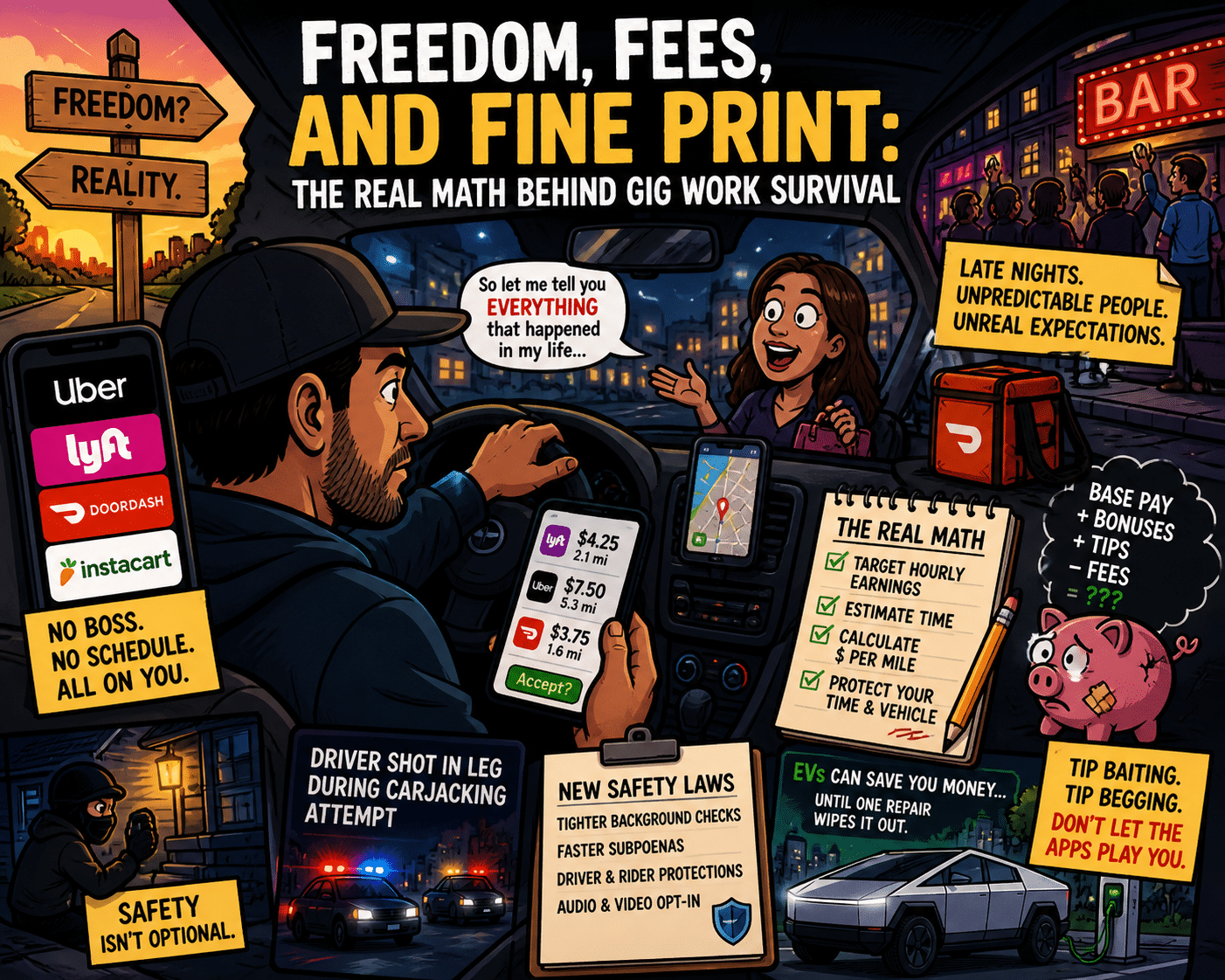
Gig work is often sold as freedom, but the day-to-day reality sits somewhere between hustle and human chaos. Larry and Gabe swap “from the road” stories that highlight the real working conditions behind rideshare and delivery apps: unpredictable conversations, passengers who overshare, late-night bar pickups, and the constant pressure to judge trip value fast. They also touch on a core gig economy skill that never makes the ads: discipline. Whether you drive for Uber, Lyft, DoorDash, or Instacart, your results hinge on choosing profitable trips, avoiding long low-pay runs, and managing your time like a small business owner, not an employee waiting for a schedule.
Seattle becomes the headline example of how gig worker pay laws can change the market. A study on Seattle’s minimum pay ordinance suggests app-based delivery worker earnings rose while order volume and demand stayed relatively steady over the first 18 months. That challenges the familiar claim that guaranteed minimum pay automatically kills gigs or collapses local business. At the same time, DoorDash argues the opposite, saying fees rose and drivers earned less. The bigger takeaway is that “gig pay” is not one number, it is a system made of base pay, bonuses, tips, and app design choices that can nudge customer behavior. When base pay rises, platforms may try to discourage tipping, shifting how drivers earn even if total pay improves.
That tension shows up again in the debate over upfront pricing and algorithmic pay. Hawaii drivers describe the move from transparent time-and-mile rates to AI-based offers that can vary wildly, even for identical trips. Drivers now have seconds to do mental math while managing traffic and passenger safety, and many feel the lack of transparency is the real issue. The conversation lands on a practical framework drivers use to survive: target hourly earnings, estimate trip time, and translate offers into a personal dollars-per-mile and dollars-per-hour standard. The episode also critiques tip-baiting and tip-begging culture, including over-the-top customer messages that pressure for “generous tips” and five-star ratings, which may backfire by feeling manipulative.
Safety and cost are the other two pillars that keep resurfacing across the episode. A video of an Amazon delivery driver encountering an armed homeowner underlines why nighttime deliveries and unclear drop-off instructions can be dangerous. A Nashville carjacking attempt ends with a DoorDash driver being shot in the leg and returning fire, raising uncomfortable questions about platform rules, self-defense, and whether policy matches reality on the street. Colorado’s proposed rideshare safety bill adds another layer: tighter background checks, faster compliance with subpoenas, and clearer opt-in audio and video recording to protect riders and drivers. Meanwhile, the tech and vehicle angle runs through the Cybertruck story and Uber’s EV charging “superpower” claims. EV fuel savings can be real for high-mile drivers, but one out-of-warranty repair can wipe out a chunk of those gains, and charging infrastructure is only as good as the companies willing to build and maintain it.