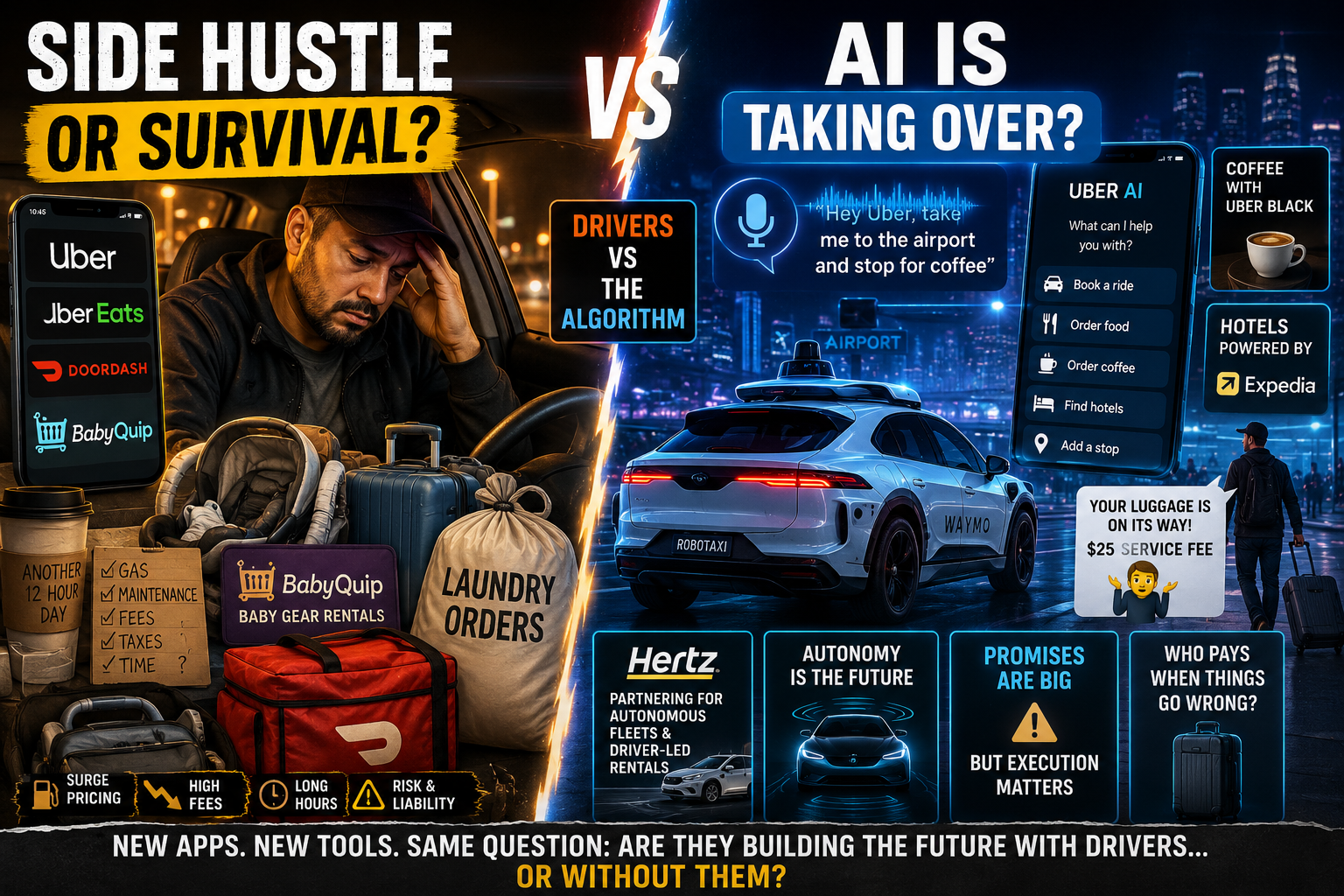
The gig economy is shifting again, and this conversation tracks the change in real time: rideshare drivers comparing weekend chaos with college crowds, then zooming out to where the work is headed. We talk about building income outside pure driving, including BabyQuip, a baby gear rental service that functions like a local logistics business. The surprising lesson is that the “rental” is often the cheapest line item, while delivery and pickup fees are where margin lives. That matters for anyone trying to diversify gig income with a side hustle that is less dependent on surge pricing and algorithm surprises.
From there we dig into Uber’s latest product announcements and what “AI in the Uber app” actually means. Voice booking sounds like a novelty until you view it through accessibility: riders with vision impairment, limited mobility, or anyone struggling with the interface can order rides and food more easily. But convenience for riders can create friction for drivers, especially if AI makes it effortless to add stops, change destinations, or stack requests mid-ride. We also talk about speed and reliability, because an AI assistant that takes extra seconds and still gets details wrong can create more disputes, more cancellations, and more blame landing on the driver.
Uber’s push to keep users inside its ecosystem shows up in features like ordering coffee with Uber Black and booking hotels through an Expedia partnership. On paper, discounts and “one app for everything” sound great, but experienced travelers know the trade-offs: third-party booking can complicate refunds, changes, and customer support. We discuss why booking direct with hotels and loyalty programs can still win on total value, even when an app advertises 20% off. The bigger trend is clear: Uber is trying to become the default marketplace for rides, delivery, travel, and add-ons.
Automation is the underlying pressure. A Hertz partnership to support autonomous fleets and driver-led rentals points to a mixed future where companies experiment with robotaxi service while also staffing fleets through employees. That raises the question drivers keep asking: are these tools being built to support drivers or to replace them? The episode also highlights how small operational failures can undermine big promises, like a Waymo taking off with a rider’s luggage at the airport and then offering an absurd “solution” that costs the rider time or money. If autonomous vehicles want trust, “lost and found” can’t be treated like a script.
We end on practical gig work reality: a viral delivery slip-and-fall that becomes a reminder to report injuries, protect yourself, and create a paper trail for workers’ comp. Then we challenge high-earning claims in gig laundry services like Poplin by doing the math on loads, fees, supplies, electricity, water, equipment wear, and the sheer time burden of 10 to 15 orders a day. The takeaway for gig workers is to focus on business models with repeatable assets, controllable pricing, and clear risk, because the next wave of rideshare technology will reward the platforms first unless drivers build leverage.