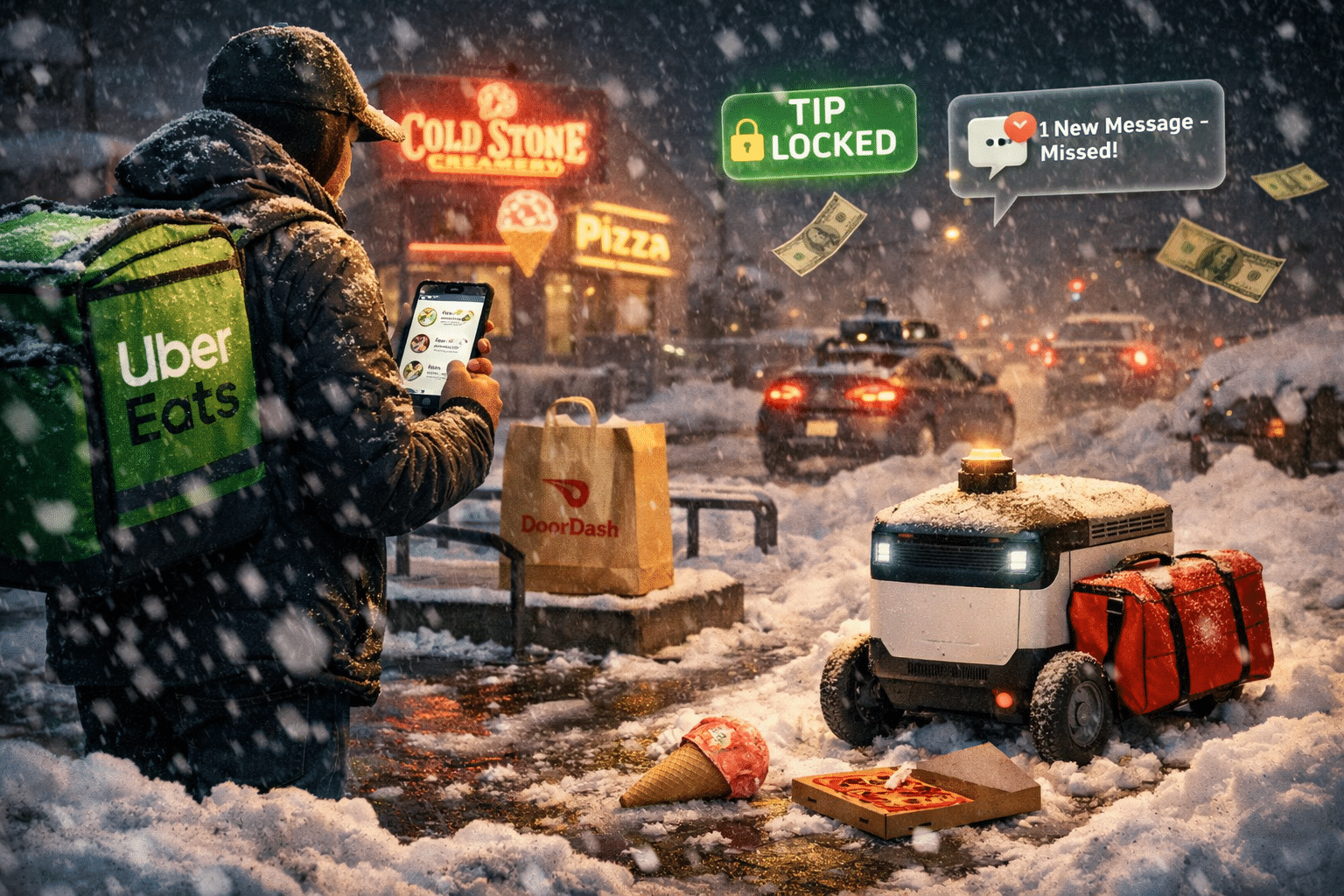
Snow stacked up on the roads and the apps kept stacking orders, and that tension set the tone for a revealing look at how gig work actually feels on the ground. A triple on Uber Eats sounded profitable until a Cold Stone add-on turned a hot pizza into a 40-minute wait. The driver’s empathy helped save the tip, but the damage to trust was clear: distant restaurants, bad weather, and batching logic do not mix. Then a DoorDash misdrop showed another everyday hazard—customer messages outside official notes can be missed when you juggle multiple orders. The make-good run back to a wheelchair ramp felt right, but it also underlined how fragile quality can be when speed, snow, and app UX collide.
That fragility fed into the biggest change of the night: Uber Eats removing the ability to edit a tip after initial selection. Drivers cheered—tip baiting hurts when you gamble time and miles only to watch earnings vanish. Customers objected—what if service is sloppy or the food is dumped at the curb? Uber says support can still adjust tips post-delivery, but the added friction shifts power toward drivers and away from instant customer reversals. The fair middle ground might be split-tipping: a portion up front to win the bid, and a simple, in-app way to add more after good service. Until apps support that, both sides live with blunt tools—pre-tips that may not match outcomes and support chats that take too long.
Money and control surfaced again with Walmart Spark’s $100 million FTC settlement headlines. Drivers received emails months ago about payouts, while new reports suggested fresh movement limited to some states. The takeaway isn’t just who gets paid; it’s how platforms communicate. If workers don’t know whether more funds are coming, they can’t plan. Clear, dated notices with links to state-by-state terms would reduce rumor and restore trust. Meanwhile, Uber’s acquisition of SpotHero showed a different tactic: pull more parts of the trip into one app. If you’re driving to a concert, booking parking inside Uber is seamless. That’s smart product strategy and a sign of where marketplaces compete now—end-to-end control of the journey.
Automation pushed the conversation from product to policy. A Waymo blocking emergency vehicles in Austin captured what makes people uneasy: a machine that won’t budge when seconds matter. If autonomous fleets are staying, cities need enforceable standards and law enforcement override protocols. Badge-based access, one-time codes, and auditable logs could let police nudge a stuck AV to the curb without a 10-minute support loop. On the small end of autonomy, DoorDash’s delivery bot zipped through a neighborhood, raising practical questions about speed, safety, and multi-order security. Even cute robots need curb help, which is why “robot wranglers” are a growing job: rescue stalls, swap batteries, and keep the fleet moving. It pays a steady wage, but it also signals that behind every “driverless” delivery is a new layer of human labor.
Across these stories, one theme holds: the gig economy keeps trading convenience for complexity. Batching boosts earnings but risks cold food; locked-in tips protect drivers but frustrate wronged customers; robots scale coverage but require people to babysit edges. The path forward is not one big fix but many small ones done well. Better filters for distance during storms. Simple post-delivery tip adds, with support gates for reductions. Transparent legal updates from platforms. Police override standards for AVs. And regular “be the customer” checks by creators and drivers so debates are grounded in how the apps actually work today. That’s how we get warmer food, fairer pay, safer streets, and less noise between the people who make these systems go.