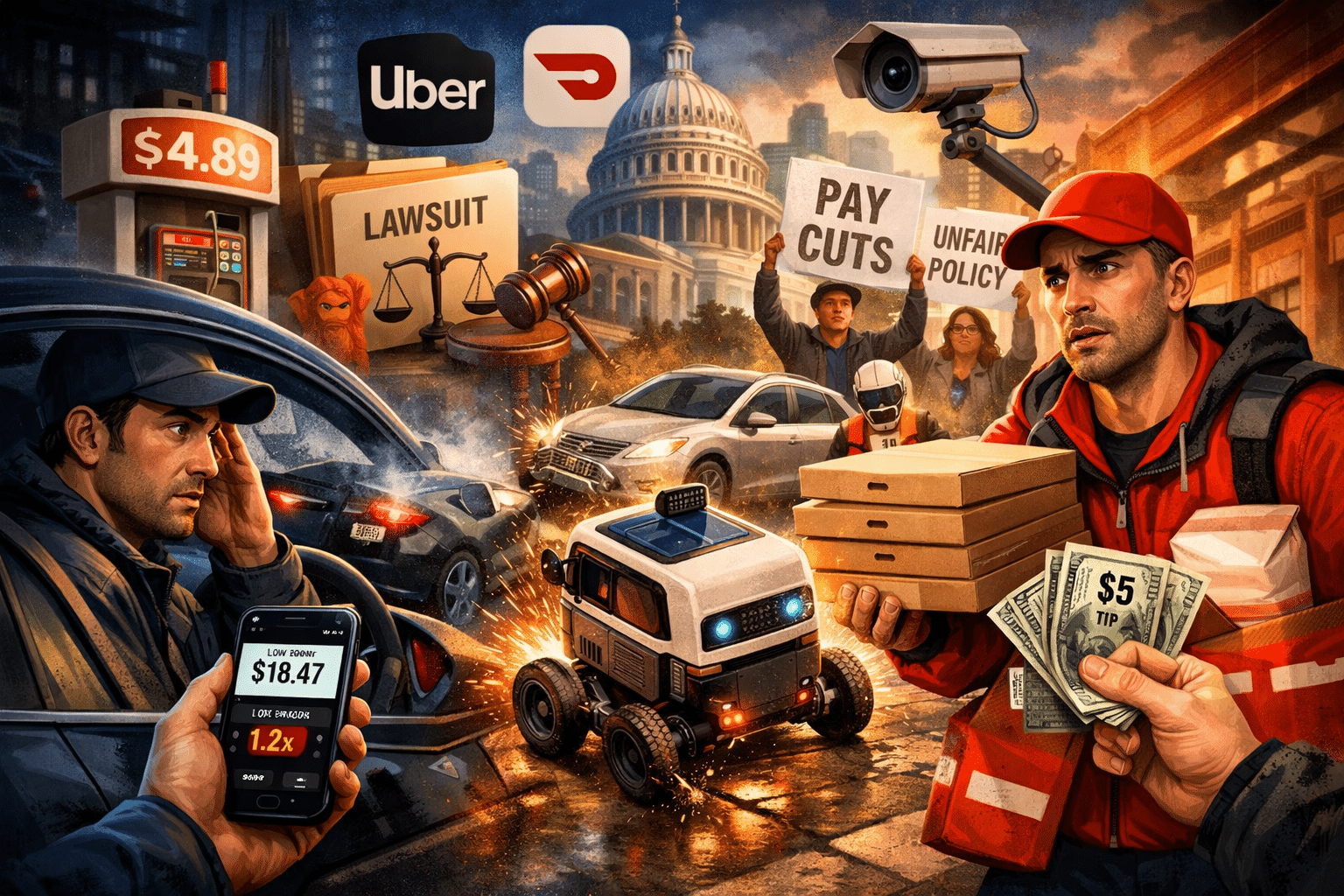
The gig economy keeps colliding with real life in ways that feel equal parts funny, stressful, and revealing. We start with the everyday moments that shape a rideshare driver and delivery driver mindset: April Fools pranks that go too far, a day built around family emergencies, and the constant math of miles, surge, and tips. Cash tips show up as a bright spot, but even that raises questions about fuel prices, customer expectations, and whether app pay is quietly training riders to let generosity fill the gaps. For anyone searching for gig economy tips, DoorDash earnings, or rideshare strategies, the theme is simple: small details add up fast.
From there, we move into the bigger forces shaping Uber, Lyft, and delivery apps. A key topic is Uber-backed legislation and political lobbying aimed at making crash lawsuits harder or less attractive for attorneys to take, even when headlines sound “pro-victim.” We talk through why settlement splits and fee caps can backfire, leaving injured riders, pedestrians, and drivers with fewer options for representation. It’s a reminder that rideshare insurance, legal liability, and platform accountability are not abstract ideas. They directly affect what happens after a crash, and they influence pricing, policy, and how safe people feel using the apps.
The episode also digs into how driver behavior and platform culture collide at pickup and restaurant counters. A viral clip shows a delivery worker walking behind the counter to grab an order, which sparks the real debate: impatience versus professionalism, and how quickly a moment can lead to deactivation. We share practical delivery driver advice that actually works, like “grease the wheels” by being polite, making eye contact, and asking clearly for the order before escalating. These tactics are not about being fake. They’re about protecting your time, your rating, and your ability to keep earning in a system that can punish you instantly.
Robots and autonomous delivery vehicles become the running thread, and not always in a hopeful way. We react to delivery robots getting flipped, a robot crashing through a glass bus shelter in Chicago, and a clip where a robot appears to need a human to press a crosswalk button. That leads to the larger question: if automation depends on humans to solve edge cases, how “autonomous” is it really? We connect this to Rivian’s spinoff building autonomous delivery vehicles tied to DoorDash funding, plus the broader trend of automated last-mile delivery. The technology is moving, but the human costs, job displacement, and safety risks are moving with it.
We close with the human side again: a tense Uber safety story where an unwanted passenger hops into the front seat at a club pickup, triggering a fight once the actual rider arrives. The safety takeaways are concrete for rideshare drivers: lock doors at night, confirm riders before unlocking, keep your car ready to move, and use dash cams and PIN verification where available. We also touch Illinois efforts to unionize rideshare drivers while keeping independent contractor status, and why that might “muddy the waters” with new fees and fragmented rules. Finally, a DoorDash driver gets suspended after posting a political threat about throwing food, underscoring the simplest rule in gig work: don’t record yourself saying you’ll harm service quality, because platforms can and will act.