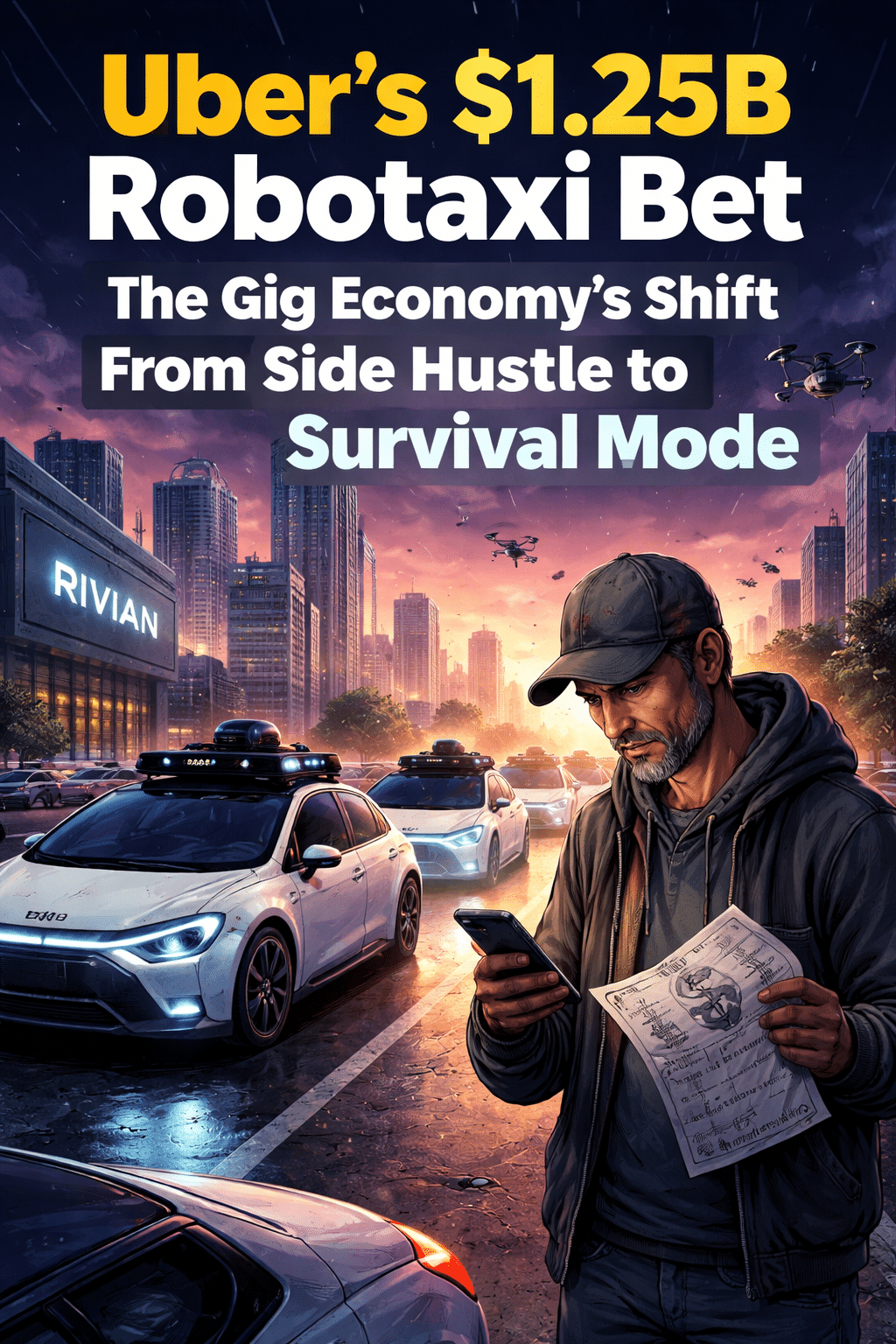
Robotaxis stopped being sci-fi and started looking like a line item in a budget. We talk through Uber’s reported plan to pour money into autonomous EVs, including a big Rivian partnership that could scale from an initial 10,000 vehicles to tens of thousands more. For rideshare drivers, the real issue is not whether self-driving cars are cool, it’s whether rideshare driving remains a reliable income option when the platform itself has a clear incentive to replace labor with automation. The gig economy has always shifted fast, but “fewer humans needed” is a different kind of shift, especially for people who jump into Uber, Lyft, DoorDash, or Instacart after layoffs and need cash quickly.
That uncertainty shows up in the small stuff too: app waitlists, support black holes, and the constant need to diversify. We swap stories about being waitlisted on Grubhub and Walmart Spark and how hard it can be to get a straight answer from support. The takeaway is practical: if your household depends on gig work income, one app is a single point of failure. Markets change, onboarding pauses, and demand swings with seasons and local competition. A resilient strategy uses multiple apps, multiple offer types, and a clear plan for downtime, not just hope that the next week will be better.
Customer trust is another pressure point, and the Uber arrival time class action lawsuit highlights why. Riders see minute-by-minute ETAs and paid options like priority pickup or “faster” selections, then feel burned when the car arrives late or the cheaper option performs the same. We talk about how cancellations, re-matching, and real-time supply can blow up predicted arrival times, yet the interface often sells certainty. That mismatch fuels complaints and lawsuits, and it can backfire on drivers too when riders assume the driver caused the delay. Clearer disclaimers and more honest ranges would reduce friction, but the platform’s pricing design is built to nudge upgrades.
Costs matter just as much as demand, and rising gas prices force hard decisions on thin margins. We break down DoorDash’s gas relief tiers and why even small per-gallon changes can feel huge when you drive daily, while also keeping perspective with “cost of doing business” math. From there we zoom out to EV adoption, hybrids, charging realities, and why automakers sometimes pull back after big losses even as long-term electrification continues globally. We also hit quirky gig news, like pickups from restaurants inside car dealerships, DoorDash “tasks” that pay for photos and data collection that can train AI and robotics, Amazon Flex branding gear debates, and a Waymo railroad-crossing incident that raises fresh questions about autonomous safety in the real world.