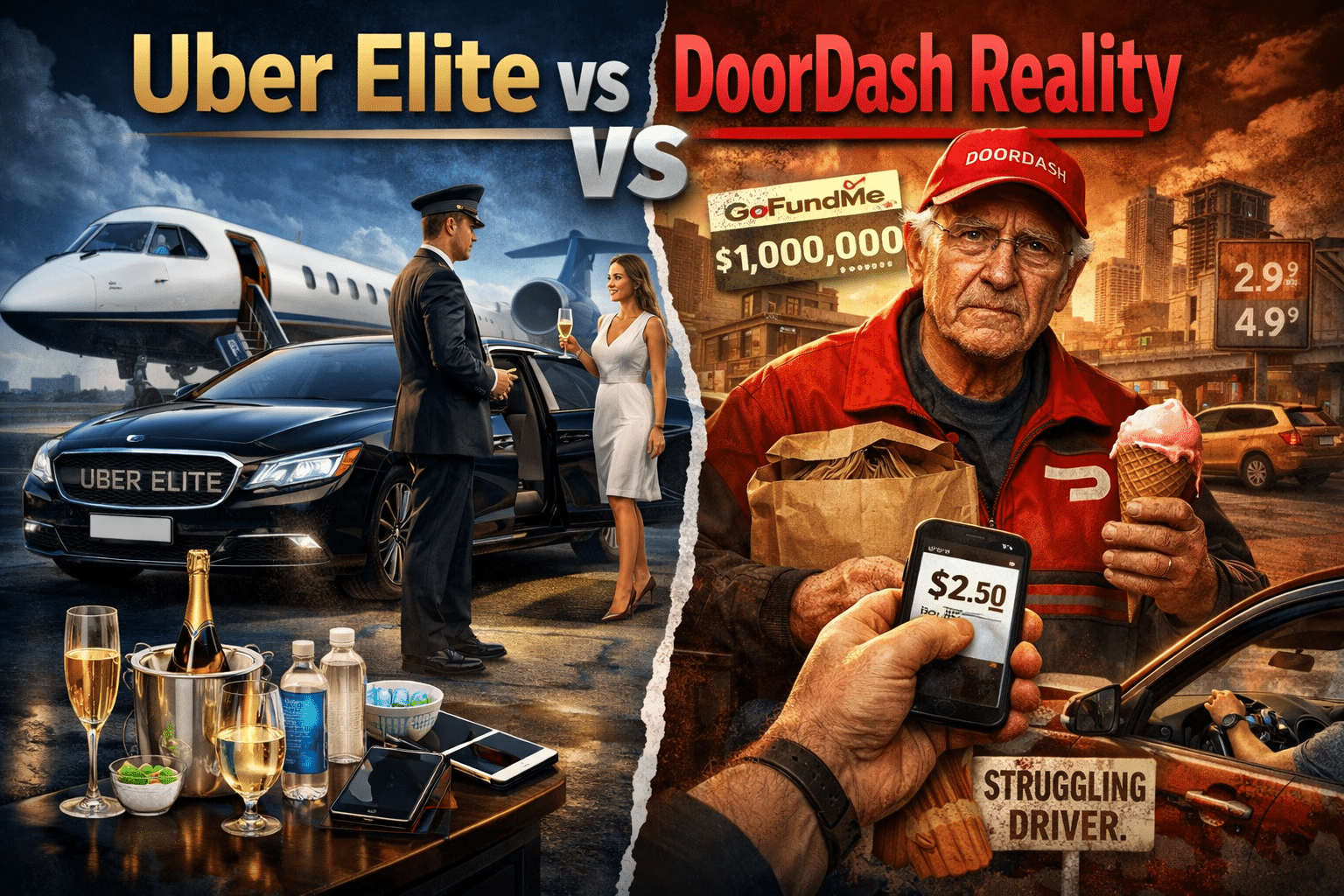
The gig economy keeps splitting into extremes: luxury upsells on one end and shrinking driver pay on the other. We talk about Uber Elite, a new premium rideshare option positioned above Uber Black with newer luxury vehicles, meet-and-greet airport pickup, and rider perks like chargers, mints, wipes, and even sparkling water or champagne requests. It raises real questions about legality, safety, and pricing, but also highlights a broader trend in rideshare and delivery: platforms keep adding tiers and fees to chase higher-spending customers while everyday drivers still fight for profitable trips. Keywords like Uber Elite, Uber Black, chauffeur service, airport pickup, and premium rideshare matter because they signal where rideshare companies want the market to go.
A viral DoorDash story shows the other side of gig work: a 78-year-old delivery driver becomes a symbol of hard work and medical-cost stress, and a GoFundMe surges to nearly $1 million. We dig into why crowdfunding is so random, why some tragedies barely raise anything, and why a single compelling clip can unlock massive generosity. It also sparks uncomfortable but important personal finance and healthcare questions: how quickly medical bills can wipe out savings, how older workers face hiring barriers, and how delivery apps like DoorDash become a last-resort income source. This is a core gig economy reality in 2026: flexible work can be a lifeline, but it is not a safety net.
Then we zoom into the day-to-day grind, including the absurdity of delivery logistics like being handed an uncovered ice cream cone for a DoorDash drop-off. That joke lands because it captures a serious operational gap: restaurants, apps, and customers often ignore food quality and temperature constraints, then drivers take the blame. From there we review Gridwise-style earnings data across apps, discussing how “hourly pay” can be misleading depending on whether it counts active time only, and why DoorDash can look painfully low if drivers accept everything. We also cover how tips dominate food delivery income compared with rideshare, and why that creates different incentives and frustrations for drivers.
Safety and accountability threads run through the rest of the conversation: creepy driver messages that explain why women-only ride options exist, debates about displaying Uber or Lyft decals and the risks of being identified, and accessibility rules around service animals and wheelchairs. We break down a Lyft service animal settlement and the practical tension between legal compliance and what drivers can realistically manage in small vehicles. Finally, we hit the future pressure points: Waymo robotaxis creating “driverless car incidents” that drain public resources when they stall, Amazon pushing one-hour and three-hour delivery to compete with Walmart, and the limits of “striking” in independent contractor work like Amazon Flex.