by Jason Tieri | Feb 23, 2026 | Podcasts
Everything Gig Economy Podcast Related: https://gigeconomyshow.com/
Download the Audio Podcast: https://thegigeconomypodcast.buzzsprout.com
Love the show? You now have the opportunity to support the show with some great rewards by becoming a Patron. Tier #2 we offer free merch, an Extra in-depth podcast per month, and an NSFW pre-show https://www.patreon.com/thegigeconpodcast
Octopus is a mobile entertainment tablet for your riders. Earn 100.00 per month for having the tablet in your car! No cost for the driver!
https://playoctopus.page.link/HD2FBKJzFqRR35YE9
The Gig Economy Podcast Group Download Telegram 1st, then click on the link to join. https://t.me/joinchat/R42wUR2QGhCi2gBD
TikTok: https://www.tiktok.com/@gigeconomypodcast?
Subscribe on Youtube https://www.youtube.com/channel/UCK_bV7j7o1BzWtB4mt_4R8Q?view_as=subscriber
This podcast is produced by Hey Guys Media Group LLC http://www.heyguysmediagroup.com
Want to start your own podcast? Reach out to them today!
by Jason Tieri | Feb 22, 2026 | Blog
Download the show here!
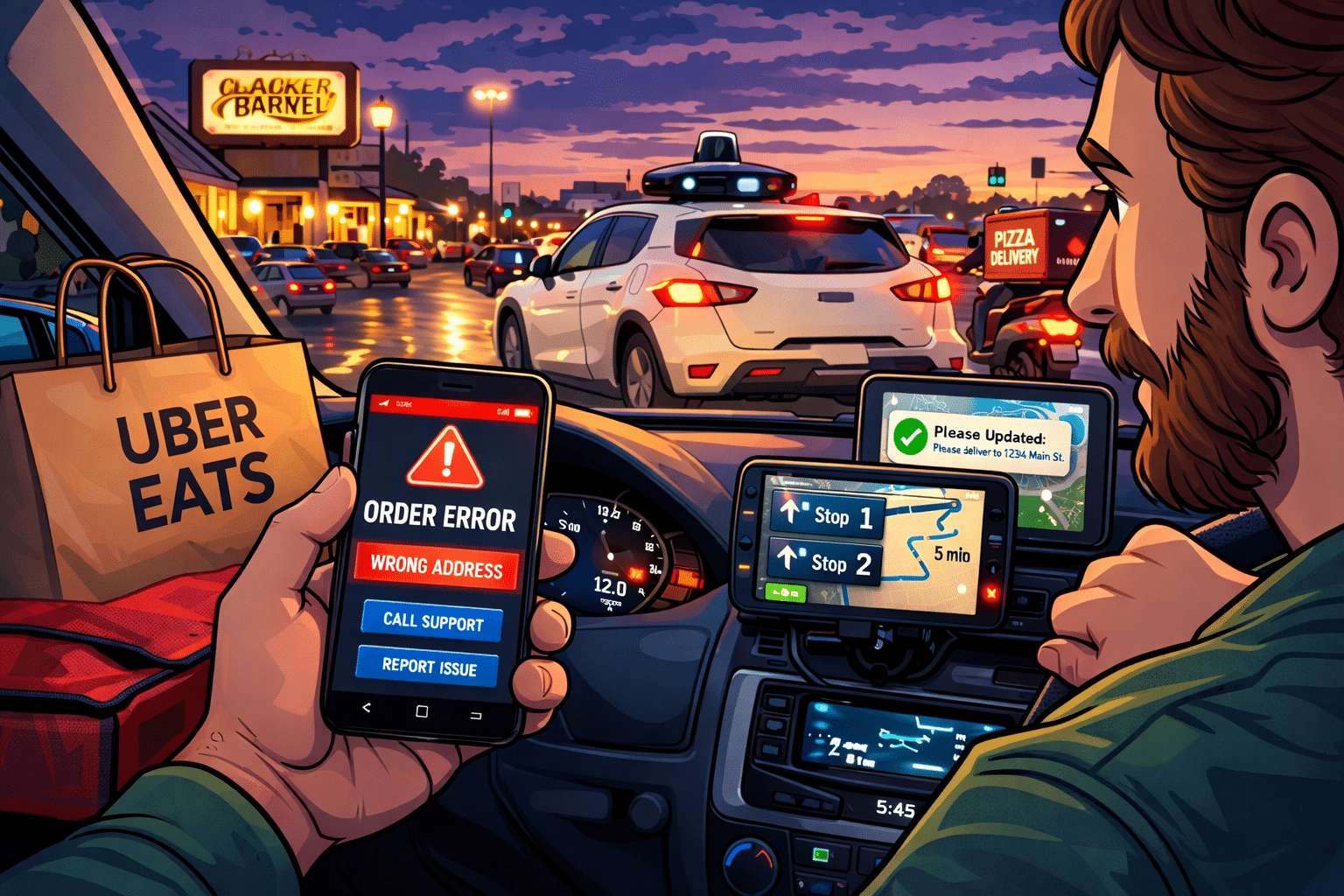
The strange reality of gig work is how routine chaos becomes. A warm winter day turns into a Telegram voice rant about a Cracker Barrel parking lot and, minutes later, a story about an Uber Eats double-order going sideways because a third-party system like Toast fed the wrong address back into the app. That whiplash is the job. Drivers juggle food delivery, rideshare, and retail pickups across time windows that rarely line up, and when a platform glitch reroutes a pizza you already delivered to a second, different address, you get stuck arguing with support to reverse fees and protect your ratings. The lesson is painfully simple: document everything, screenshot every step, and speak in short, clear statements when support gets confused. You might still lose some payout, but you’ll often salvage tip guarantees and reduce the odds of a deactivation when the software—not you—breaks.
Valentine’s week throws that mess into sharp relief. Morning demand is dead, then the evening explodes with stacked orders that leave the first meal sweating in the bag while you race to pick up the second and third. Substitutions at big-box stores become a mini negotiation in your DMs, where the customer who ordered last-minute wants a different color bear and a perfect bouquet that no longer exists. This is where experience pays: make the best swap you can, keep replies short, avoid long back-and-forths that stall you at the store, and manage expectations with a calm update on the drive. Tips often reflect composure more than perfection. Some nights the smallest deliveries tip up after the fact; other nights a $26 payout shrinks when a canceled leg wipes out the bigger gratuity. The numbers average out, but only if you keep moving.
Security and identity sit in the background until they don’t. Getting a 1099 for income you never earned is a sickening way to learn your information is in the wild. Support channels are slow, but you can protect yourself: freeze your credit at all three bureaus, use strong unique passwords, and enroll for the IRS Identity Protection PIN, which refreshes annually and stops fraudulent tax filings using your SSN. It’s not glamorous, but it’s simpler than cleaning up after a bogus account runs rides under your name. Pair that with routine checks on your insurance status and an understanding of what your platform covers during each phase of a trip. When policies shift by state or city—especially in heavy-regulation markets like New York—drivers need to know if commercial coverage is required and who pays for what when a gray-area app enters the scene.
Convenience culture is the bigger story. Food delivery is frictionless, but fees add up fast: small orders, big markups, cold entrées after multistops, and a monthly tab that can rival a car payment. For drivers, that demand funds the night, but it also fuels a cycle where some customers deliver to pay off what they spent ordering. The economics can feel upside down. When a platform hires gig workers to close a robotaxi’s open door for an extra $5 on a micro task, you see how far “anything-on-demand” has stretched. We’re closing luxury car doors from a dashboard while debating if an $11 payout for 0.7 miles is worth it. It is absurd, sure, but also a preview: autonomy will coexist with humans doing tiny, paid interventions around the edges for a long time.
Automation anxiety keeps creeping in. A Waymo on the wrong side of the road is more than a glitch; it’s a reminder that neighborhood speeds are forgiving, but highway mistakes are not. The support escalation path matters when there’s no driver to override the wheel. If the help line can’t hear you, your best safety move may be to end the ride. We can argue that highway driving is simpler than city streets, and often it is—fewer variables, clearer lanes, easier mapping—but the margin for error at 65 mph is thin. For now, human judgment remains the safety net that platforms quietly rely on, whether you’re closing a door, triaging a misroute, or deciding when to walk away from a sketchy call.
Underneath the jokes and rants is a practical code: keep records, protect your identity, understand your insurance, and value your time. If a $14-per-hour scheme requires you to accept every ride in a rental, run the math on gas, time, and upside—you probably have better options. If a catering app pauses in your state due to legal fog, diversify with a backup platform so your week doesn’t vanish. And if you’re tempted to place a third delivery order this week, maybe cook once and tip a little extra the next time you do tap the app. Gig work runs on small, everyday decisions—by riders, customers, platforms, and drivers—that either compound into stress or stack into a steady, livable flow.

by Jason Tieri | Feb 16, 2026 | Podcasts
Everything Gig Economy Podcast Related: https://gigeconomyshow.com/
Download the Audio Podcast: https://thegigeconomypodcast.buzzsprout.com
Love the show? You now have the opportunity to support the show with some great rewards by becoming a Patron. Tier #2 we offer free merch, an Extra in-depth podcast per month, and an NSFW pre-show https://www.patreon.com/thegigeconpodcast
Octopus is a mobile entertainment tablet for your riders. Earn 100.00 per month for having the tablet in your car! No cost for the driver!
https://playoctopus.page.link/HD2FBKJzFqRR35YE9
The Gig Economy Podcast Group Download Telegram 1st, then click on the link to join. https://t.me/joinchat/R42wUR2QGhCi2gBD
TikTok: https://www.tiktok.com/@gigeconomypodcast?
Subscribe on Youtube https://www.youtube.com/channel/UCK_bV7j7o1BzWtB4mt_4R8Q?view_as=subscriber
This podcast is produced by Hey Guys Media Group LLC http://www.heyguysmediagroup.com
Want to start your own podcast? Reach out to them today!
by Jason Tieri | Feb 15, 2026 | Blog
Download the Audio Podcast
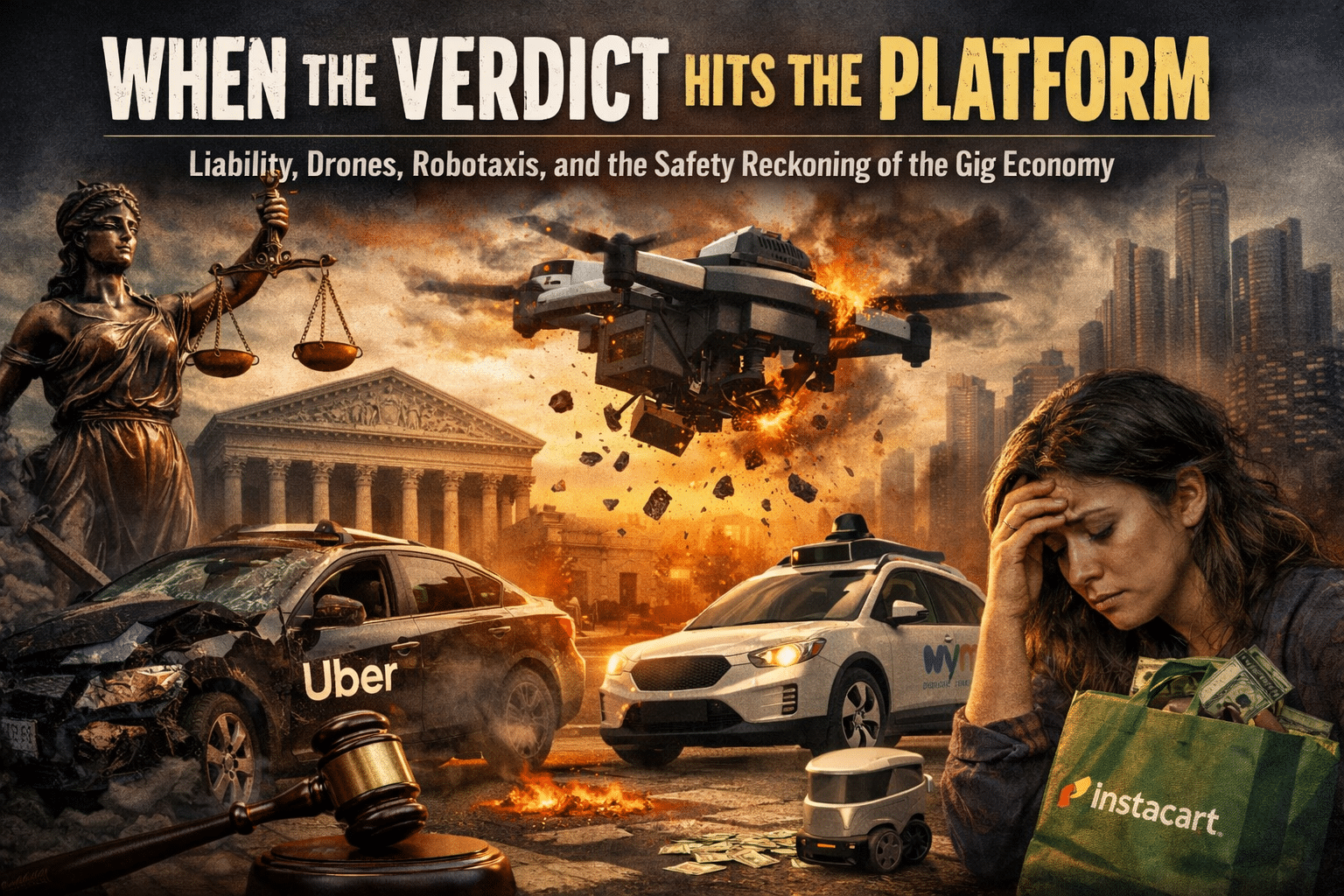
The gig economy sits at an awkward crossroads where legal theory, human harm, and fast-moving tech collide. Two court rulings anchor the moment: a jury ordering Uber to pay $858.5 million in a sexual assault case under “apparent authority,” and another awarding nearly $16 million against Instacart after an inattentive driver fatally struck a man. These aren’t just headlines; they signal a shift in who pays when things go wrong. If platforms present contractors as their face to the customer, juries may decide they share the risk. For victims, that matters—individual drivers rarely have assets or insurance limits that meet the scale of harm. For platforms, it could force overdue investment in prevention rather than PR.
Safety isn’t one story; it’s a stack. Sexual assaults, assaults on drivers, and carjackings have become so common that many creators no longer cover every case to avoid numbing listeners. Yet ignoring them helps no one. The lesson is clearer protocols and tech: always-on dual-facing dash cams subsidized by platforms, faster background check loops with real-time flags, survivor-centered reporting that doesn’t retraumatize, and transparent safety metrics. If liability rises, safety will follow the money. But we should separate preventable misconduct from accidents. Distracted driving is a choice; timelines and app nudges don’t force taps at 40 mph. Design should reduce temptation, but accountability must still live with the human behind the wheel.
Tech adds its own chaos. A viral clip shows a large delivery drone failing midair near an apartment window, debris flying and smoke billowing. At that mass and speed, it’s a lethal object, not a gadget. Meanwhile, Waymo admits “fleet response” agents—some abroad—provide guidance to stuck robotaxis while the system retains control. The nuance matters, but public trust hinges on who is really deciding when edge cases appear. If remote advisors nudge a vehicle into a risky maneuver, regulators will want logs, not assurances. And on sidewalks, Tennessee may double personal delivery device speeds to 20 mph. That’s dangerous territory when four-foot-tall robots meet strollers, seniors, and dogs in tight spaces.
The strangest subplot is how platforms stretch into unintended uses. A driver finds pills hidden in a hollowed hamburger bun for a courier run to a motel. That’s not convenience; that’s risk. The right play is immediate police contact and screenshots of the chain—sender, route, and chat. Support scripts offering $15 to bring contraband to a precinct don’t fix a system that can turn any courier into a mule. Policy needs to block suspicious package handoffs at doors, require verifiable pickup sources, and freeze accounts flagged by multiple drivers. If algorithms optimize for completed tasks over verified safety, they’ll invite the worst behavior to scale.
Even lighter moments underline serious questions. A rider places a parakeet on a Waymo’s steering wheel and gets a stern terms-of-service warning. It’s funny and harmless, but it shows how thin the membrane is between novelty and hazard when autonomy meets humans. Elsewhere, claims of 100,000 trips spark a different debate: sustainability. If you truly live on the road, EVs make economic sense—lower routine maintenance, no oil changes, regenerative braking, and predictably lower fuel costs. The downside is higher repair bills for rare failures, but for high-mileage gig workers, total cost of ownership often favors electric. Policy nudges and platform incentives could accelerate that shift and cut operating risk.
Across these threads, three priorities emerge. First, tighten platform responsibility where branding, onboarding, and customer promises clearly imply agency. Second, invest in preventive safety tech and processes that respect both riders and drivers, with clear evidence trails. Third, slow down sidewalk autonomy and air delivery until failure modes are rare and survivable. The gig economy thrives on speed, but trust is built on restraint, transparency, and care for the people doing the work. If verdicts force that recalibration, we may finally see safety treated as a feature, not a footnote.
by Jason Tieri | Feb 15, 2026 | Blog
Download the Audio Podcast!
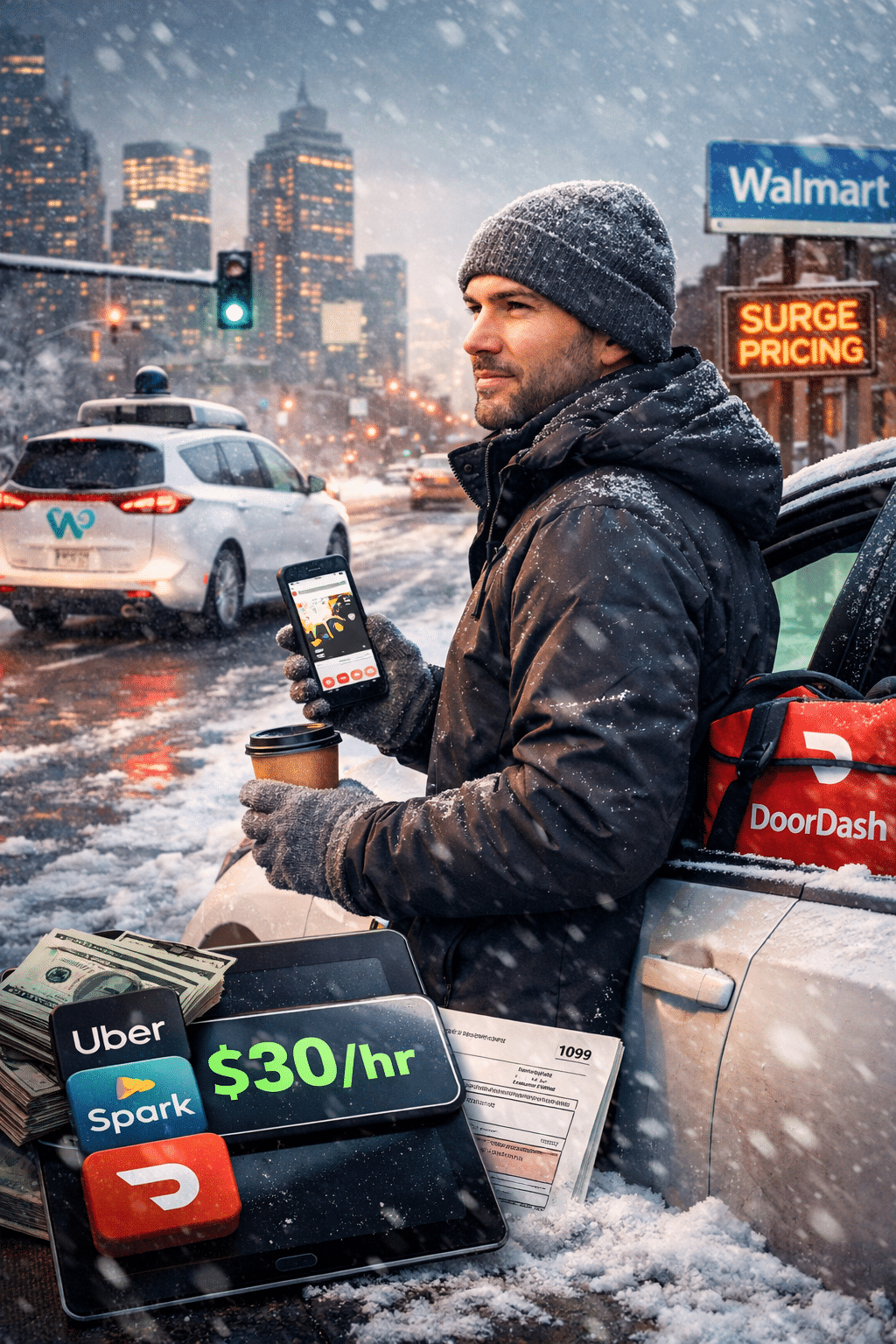
Winter set the backdrop for a wide-ranging look at gig work, from school closures and NTI policies to how drivers pivot when the world freezes up. That local chaos tied neatly into a core theme: adaptability. When weather or systems change, pros switch apps, shift hours, and choose safer routes rather than fight the tide. We walked through how daytime rides reduce drama and risk, how not to deadhead after a downtown drop, and why waiting 10 minutes in a hot zone can beat driving back empty. That small mindset shift saves time and fuel, boosting effective hourly earnings without adding stress. It also reframes slow days: you’re not stuck, you’re staging.
Payouts and platforms were next. Dovetail’s pay-for-screenshots program shut down, reminding everyone that “easy money” rarely lasts. Meanwhile Spark dangled curbside incentives that didn’t always post, reinforcing a rule: treat incentives like a bonus, not a plan. We compared short rides with strong tips against longer runs with weak add-ons and highlighted a north star for new drivers—track hourly rate across all apps, not just per-trip payouts. When you do accept a trip, treat surge and location like multipliers and skip the gut feel. Data-led choices keep you near $30 per hour more often than not.
Regulation and taxes added another layer. Platforms are splitting tips on tax statements, but guidance lags. We talked accountants, ambiguous letters, and why waiting for clarity can prevent double-taxing. Compliance cropped up again with DoorDash’s healthcare routes and Walmart’s alcohol rules, where training and certifications actually protect you. The short take: if you’re a business owner, invest in credentials that unlock higher-paying categories. The upside is more offers, less idle time, and fewer account flags.
Autonomy stole attention with Waymo’s two storylines: a low-speed child impact where braking likely beat human reaction, and a clip of a Waymo squeezing around a semi, creating a risky block. Both moments underline the transition we’re living through. Computers react faster, but they still make social mistakes. For rideshare drivers, autonomy won’t erase work soon; it will change it. Expect more value in human judgment, customer care, and edge-case handling. Meanwhile, a study shows Waymo prices sliding closer to Uber and Lyft as human rides tick up, hinting at a market where convenience and wait times decide more than novelty.
Safety and rider management rounded out the show with a tense canceled-ride standoff. Our framework: stop the car, unbuckle, secure your keys, de-escalate with clear insurance language, and call police if threatened. Never accept post-ride cash; if you must help, require immediate digital payment and still weigh the risk. Viral clips of angry couriers fueled a final point: doorbell cameras record everything. Keep your cool, even when weather, workload, or policy whiplash wears you down. The sustainable play is professionalism plus strict boundaries.
Finally, Walmart Spark’s metrics reset and tier chatter felt like a breather. Acceptance rate vanished, quantity found got simpler, and customer ratings matter more than raw acceptance. That’s healthy. It rewards accuracy, punctuality, and service over blind obedience. Across apps and seasons, the pattern holds: measure what you can control, diversify platforms, and protect your energy. The gig economy isn’t going away—it’s evolving. Drivers who treat it like a business will keep winning as the rules change.