by Jason Tieri | May 11, 2026 | Podcasts
Everything Gig Economy Podcast Related: https://gigeconomyshow.com/
Download the Audio Podcast: https://thegigeconomypodcast.buzzsprout.com
Love the show? You now have the opportunity to support the show with some great rewards by becoming a Patron. Tier #2 we offer free merch, an Extra in-depth podcast per month, and an NSFW pre-show https://www.patreon.com/thegigeconpodcast
Octopus is a mobile entertainment tablet for your riders. Earn 100.00 per month for having the tablet in your car! No cost for the driver!
https://playoctopus.page.link/HD2FBKJzFqRR35YE9
Your car stinks, use this! https://bit.ly/Driftsents
The Gig Economy Podcast Group Download Telegram 1st, then click on the link to join. https://t.me/joinchat/R42wUR2QGhCi2gBD
TikTok: https://www.tiktok.com/@gigeconomypodcast?
Subscribe on Youtube https://www.youtube.com/channel/UCK_bV7j7o1BzWtB4mt_4R8Q?view_as=subscriber
This podcast is produced by Hey Guys Media Group LLC http://www.heyguysmediagroup.com
Want to start your own podcast? Reach out to them today!
by Jason Tieri | May 10, 2026 | Blog
Download the audio podcast!
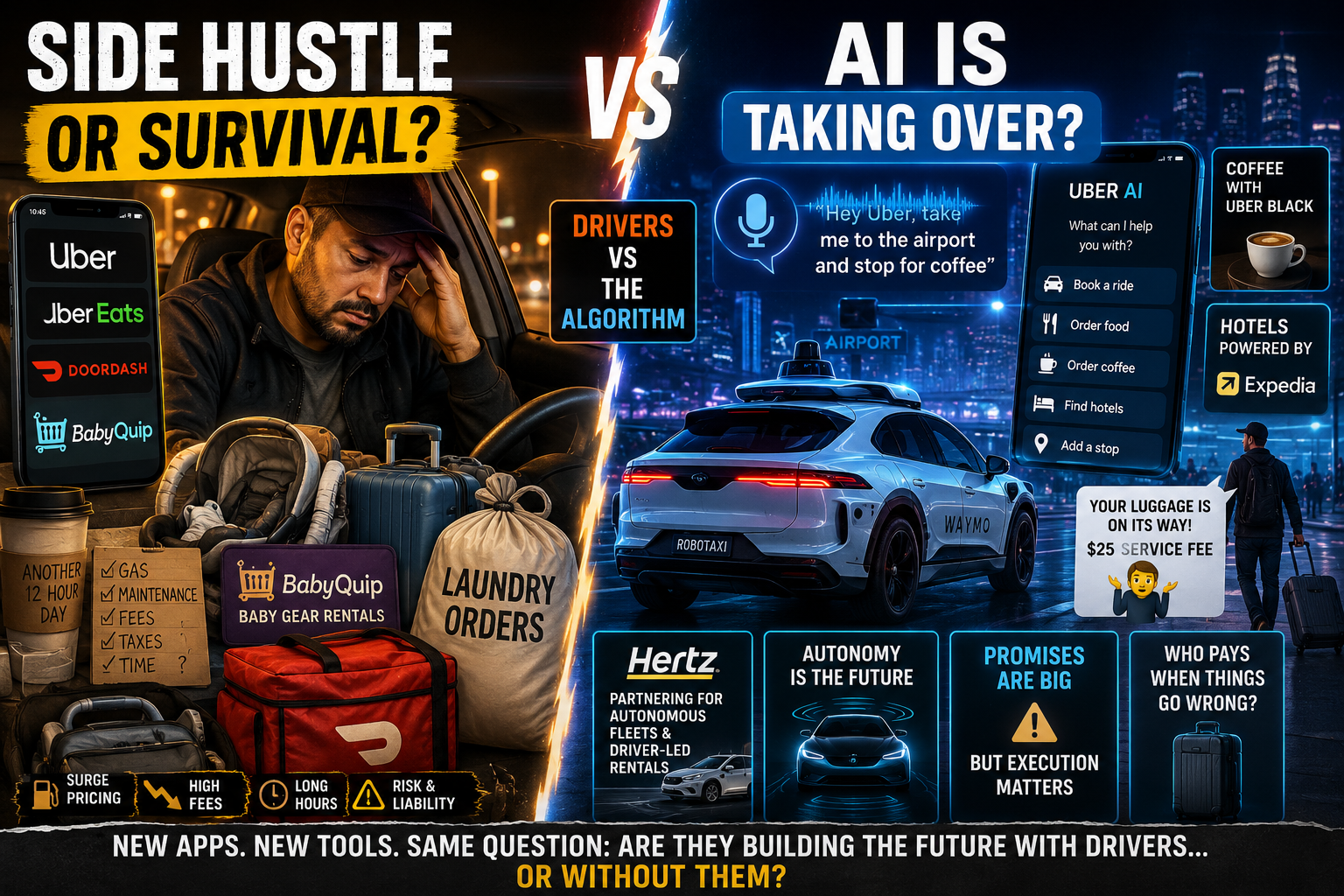
The gig economy is shifting again, and this conversation tracks the change in real time: rideshare drivers comparing weekend chaos with college crowds, then zooming out to where the work is headed. We talk about building income outside pure driving, including BabyQuip, a baby gear rental service that functions like a local logistics business. The surprising lesson is that the “rental” is often the cheapest line item, while delivery and pickup fees are where margin lives. That matters for anyone trying to diversify gig income with a side hustle that is less dependent on surge pricing and algorithm surprises.
From there we dig into Uber’s latest product announcements and what “AI in the Uber app” actually means. Voice booking sounds like a novelty until you view it through accessibility: riders with vision impairment, limited mobility, or anyone struggling with the interface can order rides and food more easily. But convenience for riders can create friction for drivers, especially if AI makes it effortless to add stops, change destinations, or stack requests mid-ride. We also talk about speed and reliability, because an AI assistant that takes extra seconds and still gets details wrong can create more disputes, more cancellations, and more blame landing on the driver.
Uber’s push to keep users inside its ecosystem shows up in features like ordering coffee with Uber Black and booking hotels through an Expedia partnership. On paper, discounts and “one app for everything” sound great, but experienced travelers know the trade-offs: third-party booking can complicate refunds, changes, and customer support. We discuss why booking direct with hotels and loyalty programs can still win on total value, even when an app advertises 20% off. The bigger trend is clear: Uber is trying to become the default marketplace for rides, delivery, travel, and add-ons.
Automation is the underlying pressure. A Hertz partnership to support autonomous fleets and driver-led rentals points to a mixed future where companies experiment with robotaxi service while also staffing fleets through employees. That raises the question drivers keep asking: are these tools being built to support drivers or to replace them? The episode also highlights how small operational failures can undermine big promises, like a Waymo taking off with a rider’s luggage at the airport and then offering an absurd “solution” that costs the rider time or money. If autonomous vehicles want trust, “lost and found” can’t be treated like a script.
We end on practical gig work reality: a viral delivery slip-and-fall that becomes a reminder to report injuries, protect yourself, and create a paper trail for workers’ comp. Then we challenge high-earning claims in gig laundry services like Poplin by doing the math on loads, fees, supplies, electricity, water, equipment wear, and the sheer time burden of 10 to 15 orders a day. The takeaway for gig workers is to focus on business models with repeatable assets, controllable pricing, and clear risk, because the next wave of rideshare technology will reward the platforms first unless drivers build leverage.

by Jason Tieri | May 4, 2026 | Podcasts
Everything Gig Economy Podcast Related: https://gigeconomyshow.com/
Download the Audio Podcast: https://thegigeconomypodcast.buzzsprout.com
Love the show? You now have the opportunity to support the show with some great rewards by becoming a Patron. Tier #2 we offer free merch, an Extra in-depth podcast per month, and an NSFW pre-show https://www.patreon.com/thegigeconpodcast
Octopus is a mobile entertainment tablet for your riders. Earn 100.00 per month for having the tablet in your car! No cost for the driver!
https://playoctopus.page.link/HD2FBKJzFqRR35YE9
Your car stinks, use this! https://bit.ly/Driftsents
The Gig Economy Podcast Group Download Telegram 1st, then click on the link to join. https://t.me/joinchat/R42wUR2QGhCi2gBD
TikTok: https://www.tiktok.com/@gigeconomypodcast?
Subscribe on Youtube https://www.youtube.com/channel/UCK_bV7j7o1BzWtB4mt_4R8Q?view_as=subscriber
This podcast is produced by Hey Guys Media Group LLC http://www.heyguysmediagroup.com
Want to start your own podcast? Reach out to them today!
by Jason Tieri | May 4, 2026 | Blog
Download the podcast!
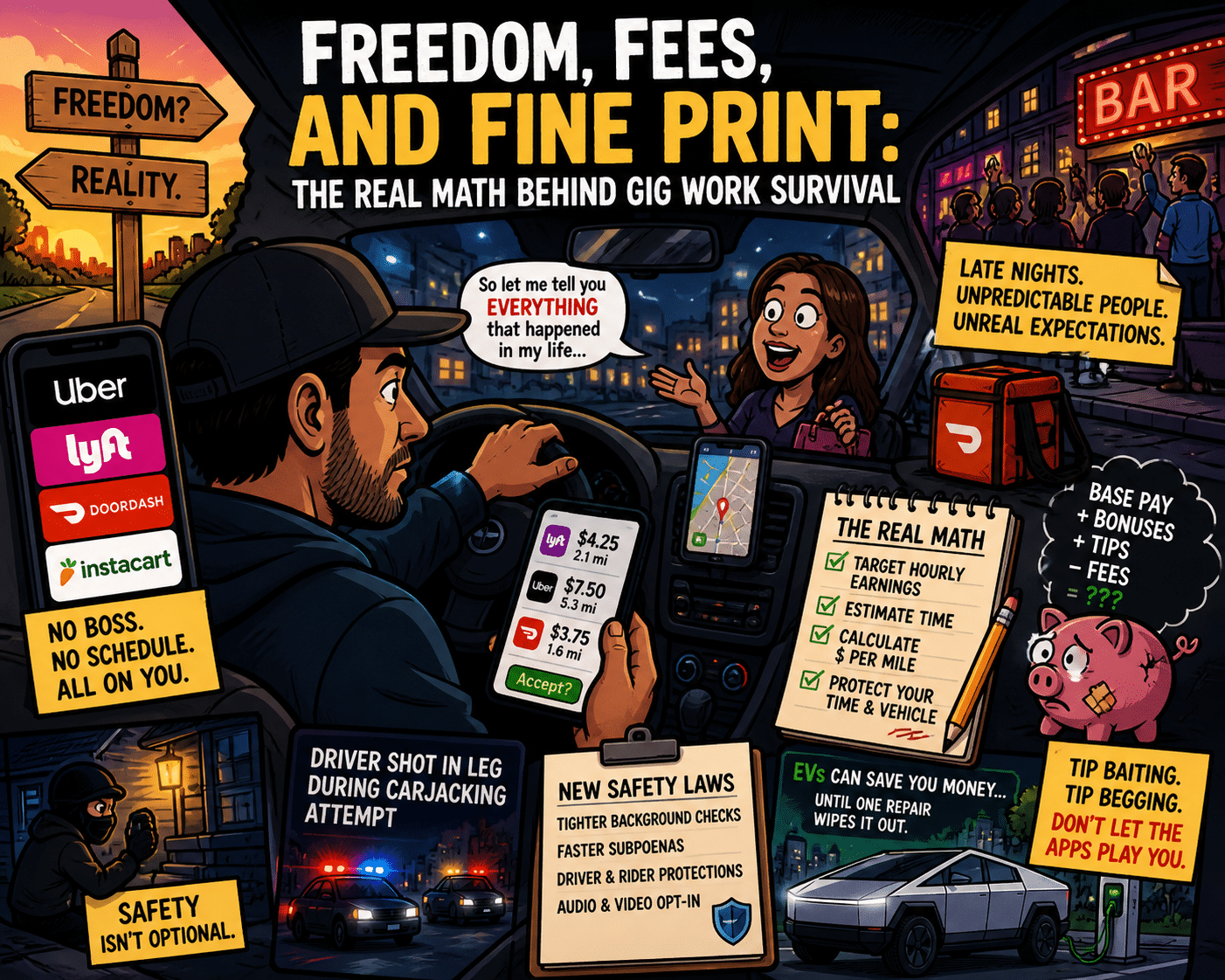
Gig work is often sold as freedom, but the day-to-day reality sits somewhere between hustle and human chaos. Larry and Gabe swap “from the road” stories that highlight the real working conditions behind rideshare and delivery apps: unpredictable conversations, passengers who overshare, late-night bar pickups, and the constant pressure to judge trip value fast. They also touch on a core gig economy skill that never makes the ads: discipline. Whether you drive for Uber, Lyft, DoorDash, or Instacart, your results hinge on choosing profitable trips, avoiding long low-pay runs, and managing your time like a small business owner, not an employee waiting for a schedule.
Seattle becomes the headline example of how gig worker pay laws can change the market. A study on Seattle’s minimum pay ordinance suggests app-based delivery worker earnings rose while order volume and demand stayed relatively steady over the first 18 months. That challenges the familiar claim that guaranteed minimum pay automatically kills gigs or collapses local business. At the same time, DoorDash argues the opposite, saying fees rose and drivers earned less. The bigger takeaway is that “gig pay” is not one number, it is a system made of base pay, bonuses, tips, and app design choices that can nudge customer behavior. When base pay rises, platforms may try to discourage tipping, shifting how drivers earn even if total pay improves.
That tension shows up again in the debate over upfront pricing and algorithmic pay. Hawaii drivers describe the move from transparent time-and-mile rates to AI-based offers that can vary wildly, even for identical trips. Drivers now have seconds to do mental math while managing traffic and passenger safety, and many feel the lack of transparency is the real issue. The conversation lands on a practical framework drivers use to survive: target hourly earnings, estimate trip time, and translate offers into a personal dollars-per-mile and dollars-per-hour standard. The episode also critiques tip-baiting and tip-begging culture, including over-the-top customer messages that pressure for “generous tips” and five-star ratings, which may backfire by feeling manipulative.
Safety and cost are the other two pillars that keep resurfacing across the episode. A video of an Amazon delivery driver encountering an armed homeowner underlines why nighttime deliveries and unclear drop-off instructions can be dangerous. A Nashville carjacking attempt ends with a DoorDash driver being shot in the leg and returning fire, raising uncomfortable questions about platform rules, self-defense, and whether policy matches reality on the street. Colorado’s proposed rideshare safety bill adds another layer: tighter background checks, faster compliance with subpoenas, and clearer opt-in audio and video recording to protect riders and drivers. Meanwhile, the tech and vehicle angle runs through the Cybertruck story and Uber’s EV charging “superpower” claims. EV fuel savings can be real for high-mile drivers, but one out-of-warranty repair can wipe out a chunk of those gains, and charging infrastructure is only as good as the companies willing to build and maintain it.
by Jason Tieri | Apr 27, 2026 | Blog
Download the audio podcast
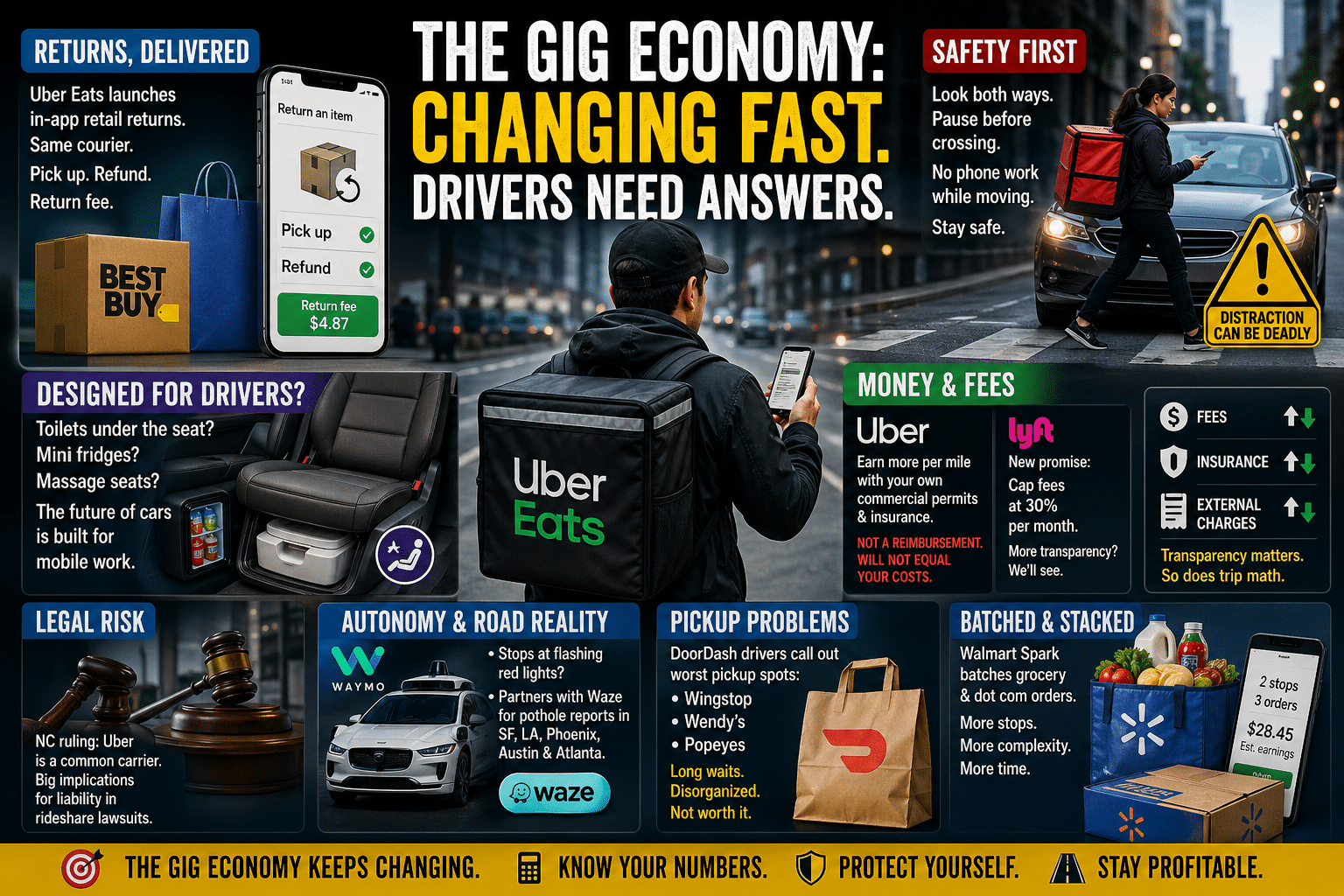
The gig economy keeps reinventing “convenience,” and this week’s news shows how fast delivery and rideshare companies are trying to become an all purpose logistics layer. Uber Eats rolling out in app retail returns is a big shift for on demand delivery: the same courier network that drops off a Best Buy order can now pick it back up, trigger a refund, and charge a return fee based on time and distance. For customers, that’s frictionless shopping. For gig workers, it raises the usual questions about pay, mileage, and whether these new tasks become another low transparency earnings category inside the Uber ecosystem.
Safety is the other side of the gig economy reality, and it’s impossible to ignore when you see a delivery driver struck while crossing in front of her vehicle. Delivery drivers, Amazon Flex drivers, and UPS style routes all share the same hazard: distraction at the exact wrong moment. Earbuds, texting, scanning the next stop, or watching a screen while stepping off a curb turns a routine drop off into a serious crash risk. The practical takeaway is simple but hard to follow on busy nights: look both ways, pause before crossing, and keep your phone work for when you are stopped, not moving.
Not every story is grim, but even the funny ones reveal real pain points. A Chinese automaker filing a patent for an in vehicle toilet under the passenger seat sounds like a joke until you remember how often drivers resort to Gatorade bottles and “thirsty goose” solutions. The conversation quickly turns from novelty to the realities of long routes, limited restrooms, and the constant push to stay online. Add a mini fridge, built in massage seats, and other car tech, and you can see where vehicle design is starting to cater to mobile work, not just commuting.
On the money side, platforms keep experimenting with how they classify costs and incentives. Uber’s message about earning more per mile with your own commercial permits and commercial insurance reads like a bonus, but the fine print matters: it is not a reimbursement and will not equal your costs. That changes the calculus for full time rideshare drivers considering private rides or commercial coverage. Meanwhile Lyft’s promise to cap its fee at 30% per month aims at the biggest driver complaint: transparency. When fees, insurance, and “external charges” move around, drivers can’t accurately price their labor or decide which trips are worth it.
Legal risk and automation also loom large. A North Carolina ruling treating Uber as a common carrier highlights how state law can shift liability in rideshare lawsuits, even years after an alleged incident. At the same time, Waymo’s autonomous vehicles provide a stream of real world edge cases, from stopping incorrectly at a flashing red light to partnering with Waze for pothole reporting in cities like San Francisco, Los Angeles, Phoenix, Austin, and Atlanta. It’s a reminder that the future of work includes both more data and more uncertainty. Add DoorDash drivers calling out worst pickup restaurants like Wingstop, Wendy’s, and Popeyes for wait times and operational chaos, plus Walmart Spark batching grocery and dot com orders, and the big theme is clear: gig work keeps changing, so drivers need sharper boundaries, better trip math, and safer habits to stay profitable.