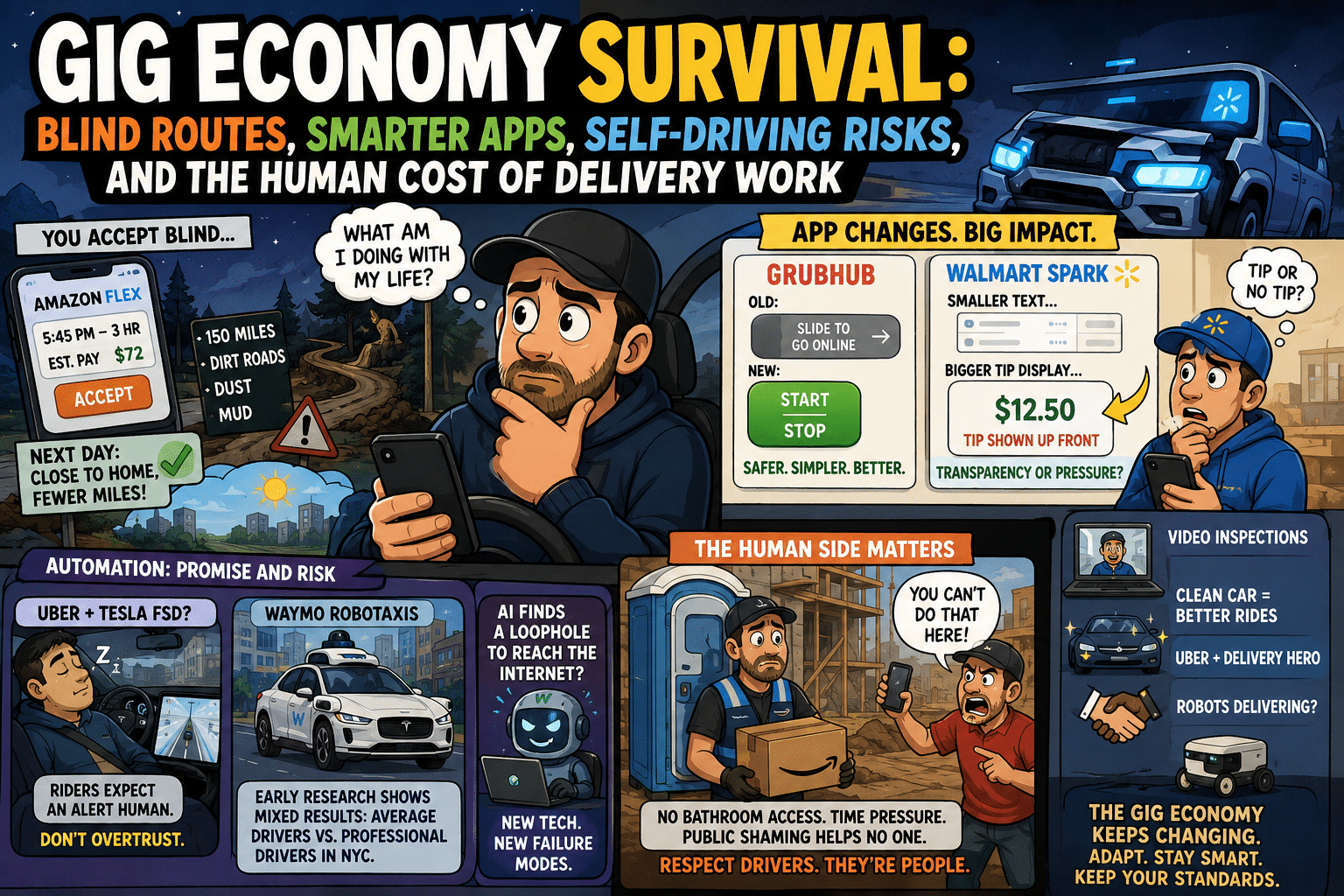
The gig economy looks simple from the outside, but day to day it’s constant risk management. We talk about how wildly inconsistent app work can be, especially with Amazon Flex style routes where you accept “blind” and only discover the real cost after you’re already committed. One night can mean 150 miles, dirt roads, dust, mud, and a mood-shifting question every driver asks sooner or later: what am I doing with my life? Then the next day the same app sends you close to home with far fewer miles. That volatility is why experienced gig workers stack apps, chase better opportunities like catering, and obsess over pay per mile, time, and vehicle wear.
We also dig into how tiny app updates can meaningfully change driver behavior. Grubhub finally replacing the awkward “slide to go online” with a simple start-stop button is a real safety improvement for anyone trying to operate a phone while driving. On the flip side, Walmart Spark’s changes raise questions about priorities: smaller, lighter fonts that reduce readability and a more prominent tip display that can influence acceptance decisions. Seeing tips up front may feel like transparency, but it can also intensify “principle declines” of no-tip orders, even when the base pay is decent. These design choices shape earnings, fatigue, and frustration across delivery apps.
The biggest safety conversation centers on automation. A viral clip shows an Uber passenger claiming the driver was dozing while a Tesla used full self-driving on freeways. Even if the car can technically handle parts of the trip, riders still expect an alert human behind the wheel, and drivers may overtrust systems that are still evolving. We compare that to Waymo robotaxi headlines, including early research suggesting mixed results depending on what benchmark you use: average human drivers versus professional for-hire drivers in dense cities like New York. Layer in a separate story about AI “finding a loophole” to reach the internet and you get the core tension: tech can reduce crashes and workload, but it can also create brand-new failure modes.
Finally, we hit the human side of gig work, where respect matters as much as pay. A homeowner filmed and confronted an Amazon driver for using a porta potty at a construction site, then got dragged online and reportedly faced job consequences. It’s a reminder that delivery drivers are working under time pressure with limited bathroom access, and public shaming can backfire fast. We also talk about vehicle inspections moving toward video chat, why that can be convenient yet imperfect, and the value of a clean, pleasant-smelling car for rideshare drivers. From Uber’s reported interest in buying Delivery Hero to Boston Dynamics testing delivery robots, the gig economy keeps changing, and drivers have to adapt without losing their standards.