
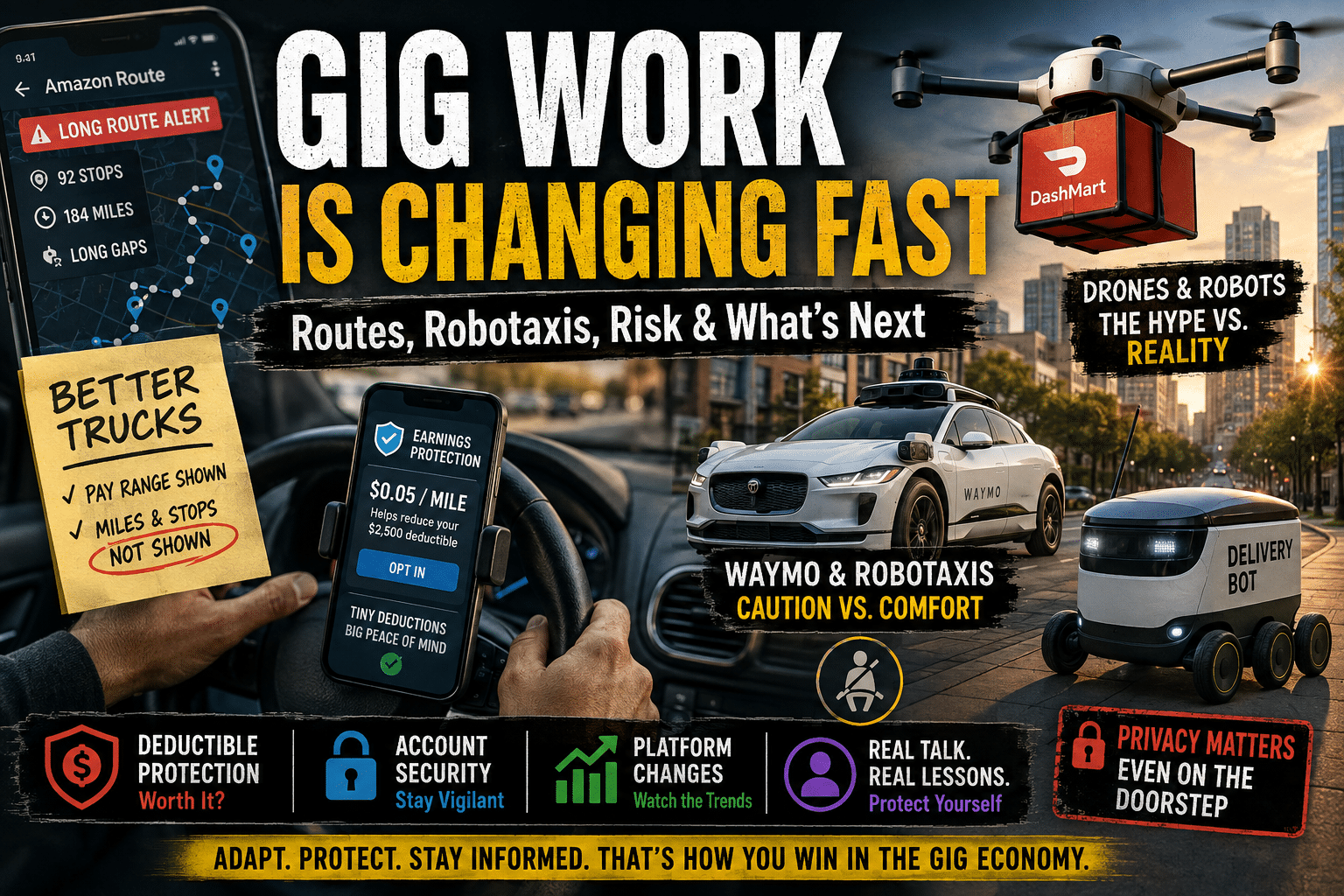
Gig economy work is changing fast, and the day-to-day reality still swings between messy routes and new platforms that promise better pay. We talk through what it feels like when an Amazon-style route blows up into long gaps between stops, ballooning mileage, and frustration that drivers end up eating. We also dig into Better Trucks, a newer delivery app that shows a pay range but doesn’t clearly show miles or stop count up front. That missing info matters for any independent contractor doing delivery driving, because profit depends on route density, dead miles, and how smooth the driver app works when you’re out in the field.
From there, we shift into the bigger forces reshaping rideshare and delivery. Waymo and robotaxi tech are no longer a distant concept, they’re something drivers and riders are encountering in real cities. We discuss the ride feel, why self-driving can seem “herky jerky,” and the core tradeoff between caution and comfort. The key point is that autonomy is expanding in public, and gig workers should track it like any other market change. If robotaxis cut travel times and lower cost on longer trips, that pressure lands back on Uber and Lyft pricing and, eventually, driver earnings.
Money risk comes up again with Uber’s optional plan that charges a small per-mile amount to reduce a large deductible after an accident. For many rideshare drivers, a $2,500 deductible is not just a number, it can be weeks of lost income if the car is down and cash is tight. We break down how a few cents per mile adds up, who benefits if you drive 10,000 to 20,000 miles a year, and why “tiny weekly deductions” can feel different than facing a big bill at the worst time. We also connect this to broader security concerns, including fleet account hacks and why platforms keep adding ID checks and video verification.
Finally, we get into delivery drones, delivery robots, and why the details matter more than the hype. Drones may make sense for DashMart-style hubs and small non-perishable orders, but fast food logistics, windy days, and safe drop-off placement are real constraints. Ground robots may be more practical in dense areas, yet they still raise questions about theft, accessibility, and who is liable when something goes wrong. We also revisit a viral DoorDash case as a blunt reminder: privacy rules apply even when you’re “just delivering,” especially if you create content at customer homes. The future of gig work will reward drivers who adapt, protect themselves, and stay informed.