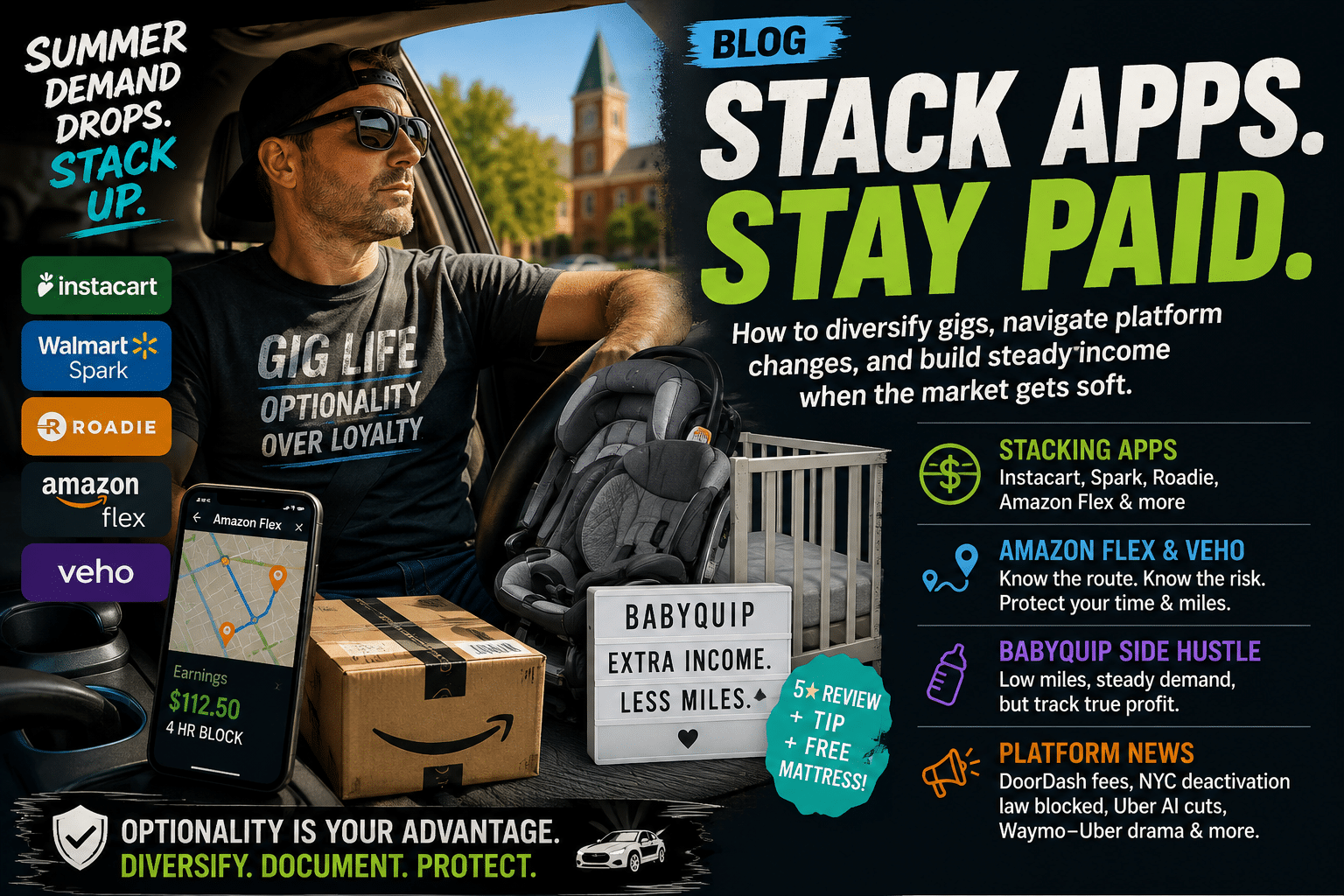
Summer can expose every weak spot in gig work. When college towns thin out and demand drops, you either panic or you get systematic about “stacking apps” so your wheels keep turning. We talk through the practical reality of running multiple platforms at once: turning on Instacart, Spark, Roadie, and especially Amazon Flex-style routes to fill the dead space between better offers. The key gig economy skill is not loyalty, it is optionality. When one app slows, you need a backup plan that still fits your car, your schedule, and your risk tolerance, so your weekly earnings do not hinge on a single algorithm.
Amazon delivery blocks can still be a lifeline when the market is soft, but the details matter more than the headline rate. A high-paying route close to home can outperform a “good” offer that sends you deep into the boonies with long unpaid miles back. We also dig into newer delivery options like Veho, where routes can feel like a blind bag: posted at night with limited clarity, then revealed later with a heat map and tighter pricing. That uncertainty is a real operational issue for drivers, because package count and vehicle capacity are not optional details. The takeaway is to treat every platform as a business contract: know the commitment, know the downside, and do not gamble your night just to lock in a spot.
On the non-delivery side, BabyQuip shows how the gig economy is expanding beyond rideshare and food. Renting baby gear like cribs and car seats can create surprisingly steady extra income with fewer miles and less customer friction, especially when most orders go to Airbnbs and travelers who do not want to fly with bulky gear. But this “micro-rental business” comes with its own constraints: storage, inventory investment, cleaning, and seasonal demand. A five-star review, a strong tip, and even a free mattress can make the model feel exciting, yet it still works best when you track true profit after time, space, and wear, not just gross revenue.
We also cover platform news that directly affects drivers and customers. DoorDash is shifting to a fee structure that varies by order size and distance, including possible long-distance fees over 10 miles and “farther away” labels that prime customers to blame price on the driver. At the same time, a New York City deactivation rule aimed at transparency gets temporarily blocked, which highlights the core tension: companies want fast removals for safety, while drivers want clear reasons and a real appeal process. Add Uber cutting customer service staff while “embracing AI,” plus the Waymo versus Uber robotaxi partnership getting rocky, and the pattern is clear: efficiency is rising, but accountability is not guaranteed. If you drive or deliver, protect yourself with diversification, documentation, and habits that reduce preventable disputes before an app’s decision becomes your problem.