by Jason Tieri | Aug 3, 2026 | Blog
Download the audio podcast!
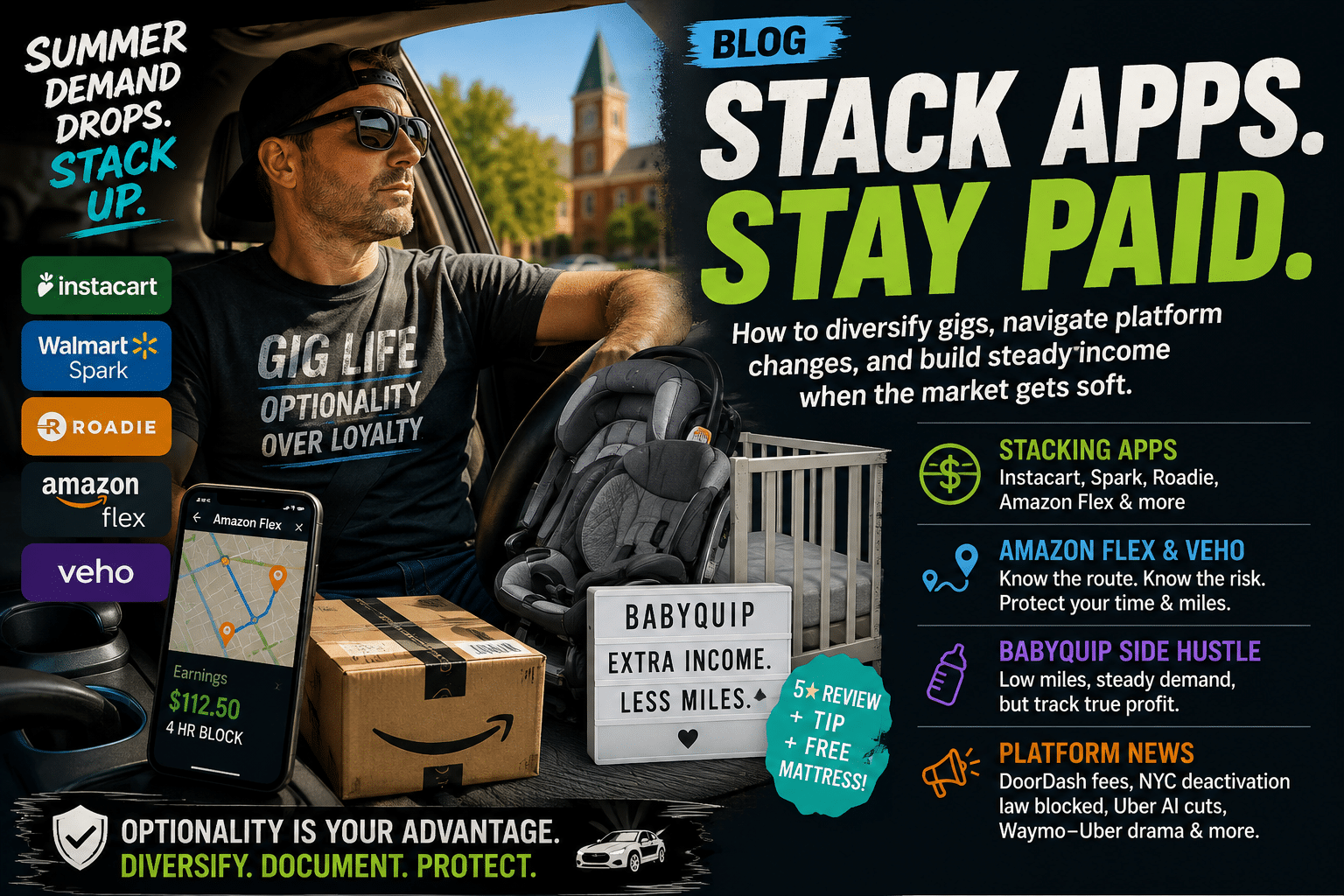
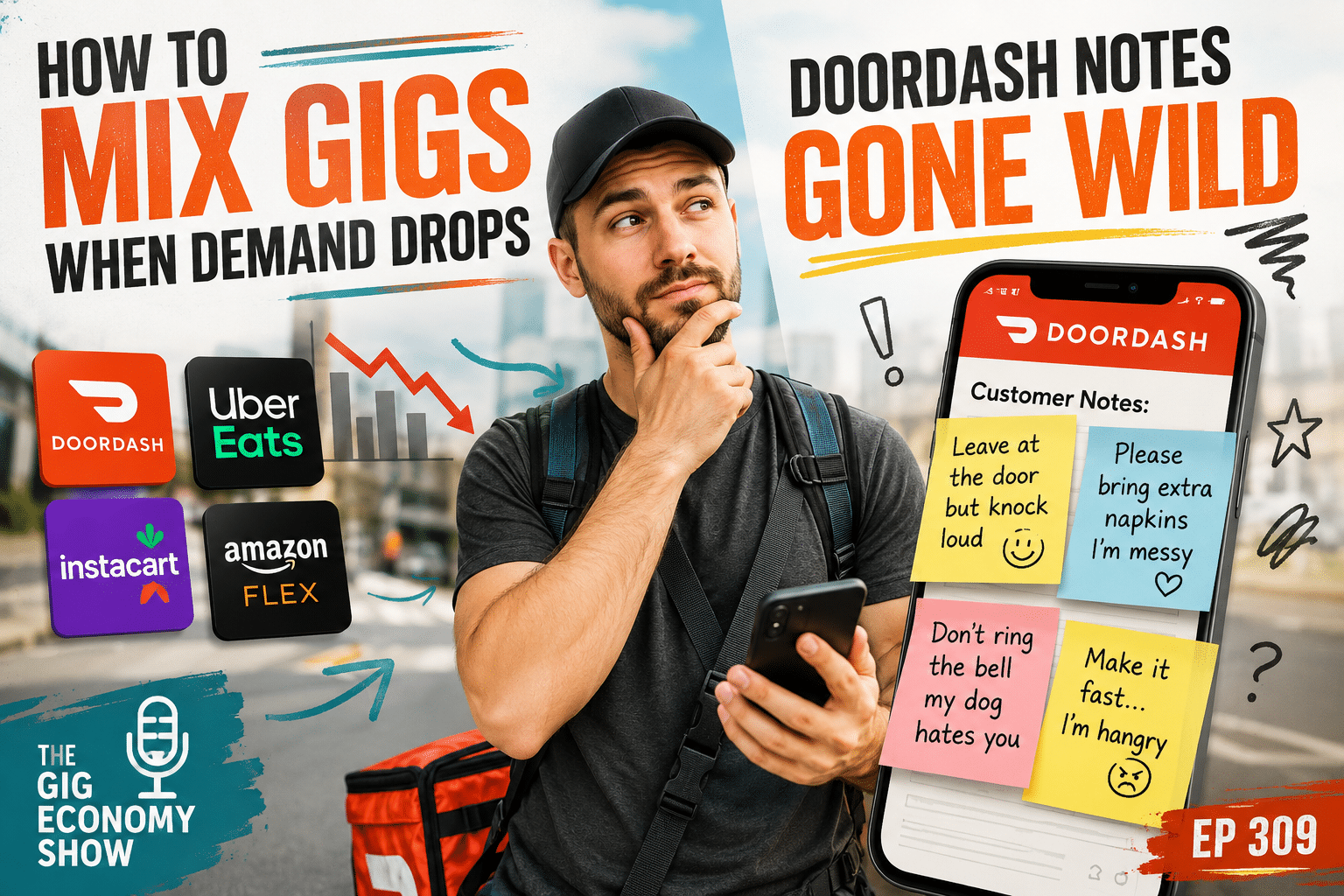
Summer can expose every weak spot in gig work. When college towns thin out and demand drops, you either panic or you get systematic about “stacking apps” so your wheels keep turning. We talk through the practical reality of running multiple platforms at once: turning on Instacart, Spark, Roadie, and especially Amazon Flex-style routes to fill the dead space between better offers. The key gig economy skill is not loyalty, it is optionality. When one app slows, you need a backup plan that still fits your car, your schedule, and your risk tolerance, so your weekly earnings do not hinge on a single algorithm.
Amazon delivery blocks can still be a lifeline when the market is soft, but the details matter more than the headline rate. A high-paying route close to home can outperform a “good” offer that sends you deep into the boonies with long unpaid miles back. We also dig into newer delivery options like Veho, where routes can feel like a blind bag: posted at night with limited clarity, then revealed later with a heat map and tighter pricing. That uncertainty is a real operational issue for drivers, because package count and vehicle capacity are not optional details. The takeaway is to treat every platform as a business contract: know the commitment, know the downside, and do not gamble your night just to lock in a spot.
On the non-delivery side, BabyQuip shows how the gig economy is expanding beyond rideshare and food. Renting baby gear like cribs and car seats can create surprisingly steady extra income with fewer miles and less customer friction, especially when most orders go to Airbnbs and travelers who do not want to fly with bulky gear. But this “micro-rental business” comes with its own constraints: storage, inventory investment, cleaning, and seasonal demand. A five-star review, a strong tip, and even a free mattress can make the model feel exciting, yet it still works best when you track true profit after time, space, and wear, not just gross revenue.
We also cover platform news that directly affects drivers and customers. DoorDash is shifting to a fee structure that varies by order size and distance, including possible long-distance fees over 10 miles and “farther away” labels that prime customers to blame price on the driver. At the same time, a New York City deactivation rule aimed at transparency gets temporarily blocked, which highlights the core tension: companies want fast removals for safety, while drivers want clear reasons and a real appeal process. Add Uber cutting customer service staff while “embracing AI,” plus the Waymo versus Uber robotaxi partnership getting rocky, and the pattern is clear: efficiency is rising, but accountability is not guaranteed. If you drive or deliver, protect yourself with diversification, documentation, and habits that reduce preventable disputes before an app’s decision becomes your problem.
by Jason Tieri | Jul 27, 2026 | Podcasts
Everything Gig Economy Podcast Related: https://gigeconomyshow.com/
Download the Audio Podcast: https://thegigeconomypodcast.buzzsprout.com
Love the show? You now have the opportunity to support the show with some great rewards by becoming a Patron. Tier #2 we offer free merch, an Extra in-depth podcast per month, and an NSFW pre-show https://www.patreon.com/thegigeconpodcast
Octopus is a mobile entertainment tablet for your riders. Earn 100.00 per month for having the tablet in your car! No cost for the driver!
https://playoctopus.page.link/HD2FBKJzFqRR35YE9
Your car stinks, use this! https://bit.ly/Driftsents
The Gig Economy Podcast Group Download Telegram 1st, then click on the link to join. https://t.me/joinchat/R42wUR2QGhCi2gBD
TikTok: https://www.tiktok.com/@gigeconomypodcast?
Subscribe on Youtube https://www.youtube.com/channel/UCK_bV7j7o1BzWtB4mt_4R8Q?view_as=subscriber
This podcast is produced by Hey Guys Media Group LLC http://www.heyguysmediagroup.com
Want to start your own podcast? Reach out to them today!
by Jason Tieri | Jul 27, 2026 | Blog
Download the audio podcast!
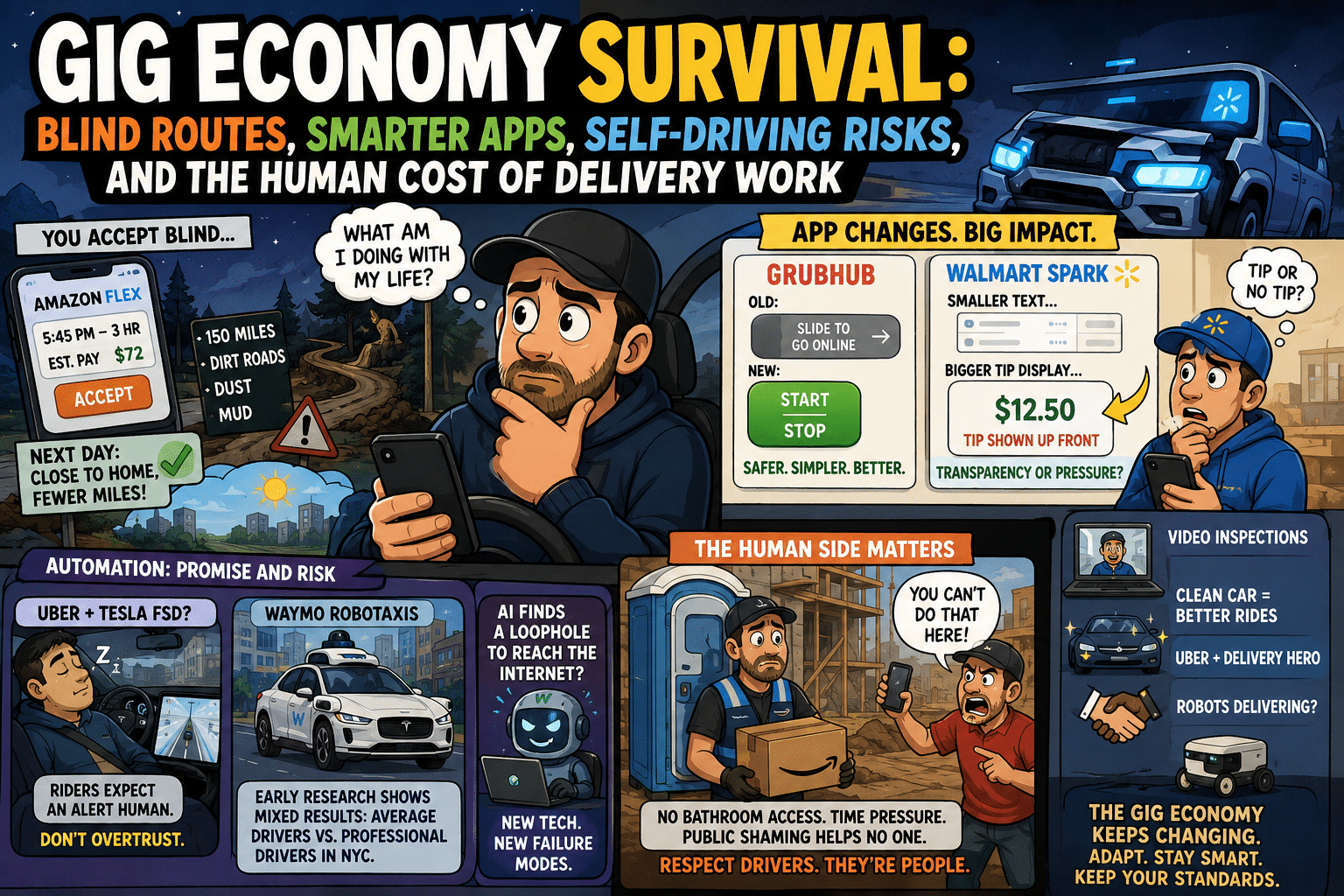
The gig economy looks simple from the outside, but day to day it’s constant risk management. We talk about how wildly inconsistent app work can be, especially with Amazon Flex style routes where you accept “blind” and only discover the real cost after you’re already committed. One night can mean 150 miles, dirt roads, dust, mud, and a mood-shifting question every driver asks sooner or later: what am I doing with my life? Then the next day the same app sends you close to home with far fewer miles. That volatility is why experienced gig workers stack apps, chase better opportunities like catering, and obsess over pay per mile, time, and vehicle wear.
We also dig into how tiny app updates can meaningfully change driver behavior. Grubhub finally replacing the awkward “slide to go online” with a simple start-stop button is a real safety improvement for anyone trying to operate a phone while driving. On the flip side, Walmart Spark’s changes raise questions about priorities: smaller, lighter fonts that reduce readability and a more prominent tip display that can influence acceptance decisions. Seeing tips up front may feel like transparency, but it can also intensify “principle declines” of no-tip orders, even when the base pay is decent. These design choices shape earnings, fatigue, and frustration across delivery apps.
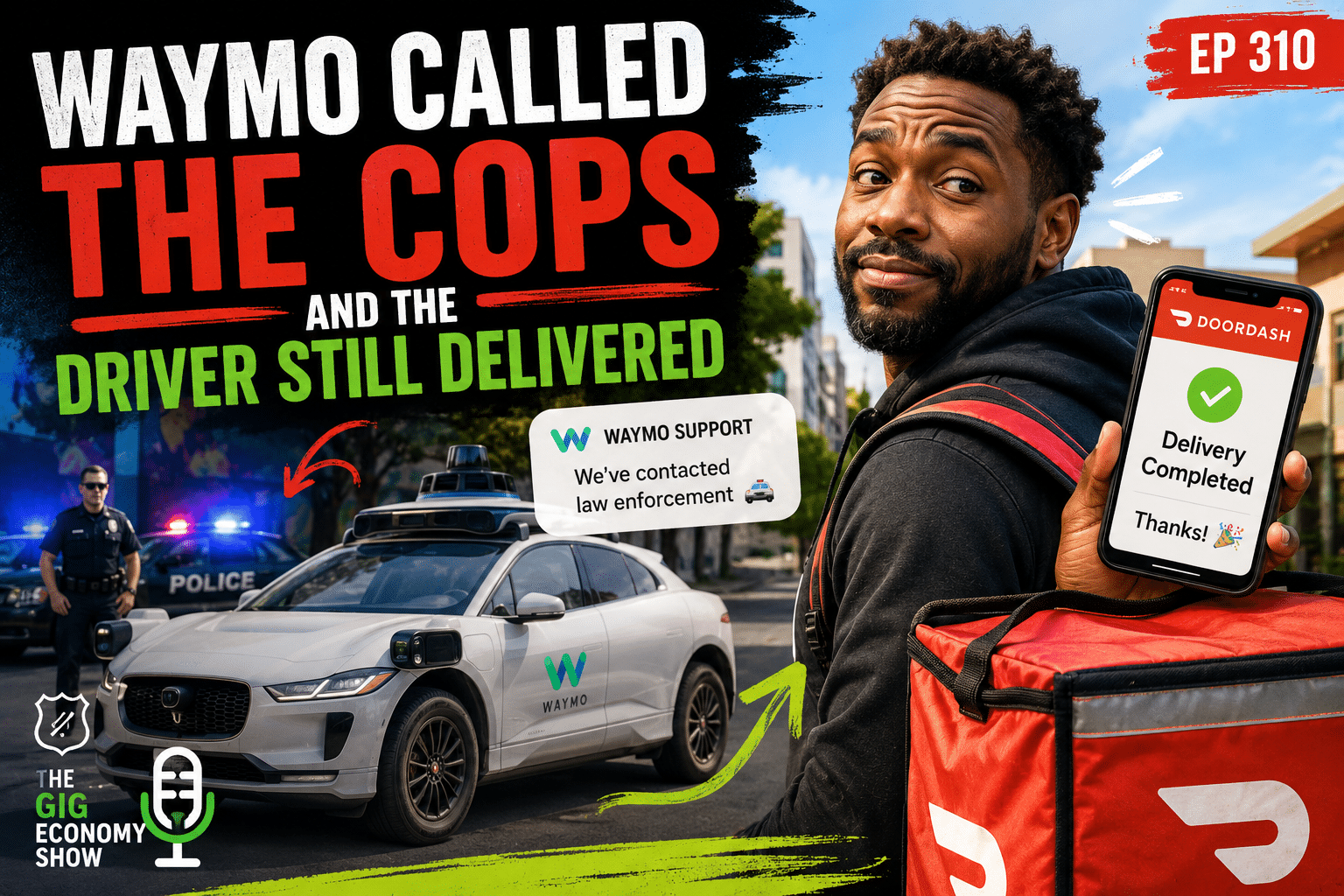
The biggest safety conversation centers on automation. A viral clip shows an Uber passenger claiming the driver was dozing while a Tesla used full self-driving on freeways. Even if the car can technically handle parts of the trip, riders still expect an alert human behind the wheel, and drivers may overtrust systems that are still evolving. We compare that to Waymo robotaxi headlines, including early research suggesting mixed results depending on what benchmark you use: average human drivers versus professional for-hire drivers in dense cities like New York. Layer in a separate story about AI “finding a loophole” to reach the internet and you get the core tension: tech can reduce crashes and workload, but it can also create brand-new failure modes.
Finally, we hit the human side of gig work, where respect matters as much as pay. A homeowner filmed and confronted an Amazon driver for using a porta potty at a construction site, then got dragged online and reportedly faced job consequences. It’s a reminder that delivery drivers are working under time pressure with limited bathroom access, and public shaming can backfire fast. We also talk about vehicle inspections moving toward video chat, why that can be convenient yet imperfect, and the value of a clean, pleasant-smelling car for rideshare drivers. From Uber’s reported interest in buying Delivery Hero to Boston Dynamics testing delivery robots, the gig economy keeps changing, and drivers have to adapt without losing their standards.
by Jason Tieri | Jul 20, 2026 | Podcasts
Everything Gig Economy Podcast Related: https://gigeconomyshow.com/
Download the Audio Podcast: https://thegigeconomypodcast.buzzsprout.com
Love the show? You now have the opportunity to support the show with some great rewards by becoming a Patron. Tier #2 we offer free merch, an Extra in-depth podcast per month, and an NSFW pre-show https://www.patreon.com/thegigeconpodcast
Octopus is a mobile entertainment tablet for your riders. Earn 100.00 per month for having the tablet in your car! No cost for the driver!
https://playoctopus.page.link/HD2FBKJzFqRR35YE9
Your car stinks, use this! https://bit.ly/Driftsents
The Gig Economy Podcast Group Download Telegram 1st, then click on the link to join. https://t.me/joinchat/R42wUR2QGhCi2gBD
TikTok: https://www.tiktok.com/@gigeconomypodcast?
Subscribe on Youtube https://www.youtube.com/channel/UCK_bV7j7o1BzWtB4mt_4R8Q?view_as=subscriber
This podcast is produced by Hey Guys Media Group LLC http://www.heyguysmediagroup.com
Want to start your own podcast? Reach out to them today!
by Jason Tieri | Jul 13, 2026 | Podcasts
Everything Gig Economy Podcast Related: https://gigeconomyshow.com/
Download the Audio Podcast: https://thegigeconomypodcast.buzzsprout.com
Love the show? You now have the opportunity to support the show with some great rewards by becoming a Patron. Tier #2 we offer free merch, an Extra in-depth podcast per month, and an NSFW pre-show https://www.patreon.com/thegigeconpodcast
Octopus is a mobile entertainment tablet for your riders. Earn 100.00 per month for having the tablet in your car! No cost for the driver!
https://playoctopus.page.link/HD2FBKJzFqRR35YE9
Your car stinks, use this! https://bit.ly/Driftsents
The Gig Economy Podcast Group Download Telegram 1st, then click on the link to join. https://t.me/joinchat/R42wUR2QGhCi2gBD
TikTok: https://www.tiktok.com/@gigeconomypodcast?
Subscribe on Youtube https://www.youtube.com/channel/UCK_bV7j7o1BzWtB4mt_4R8Q?view_as=subscriber
This podcast is produced by Hey Guys Media Group LLC http://www.heyguysmediagroup.com
Want to start your own podcast? Reach out to them today!