by Jason Tieri | Feb 15, 2026 | Blog
Download the Audio Podcast!
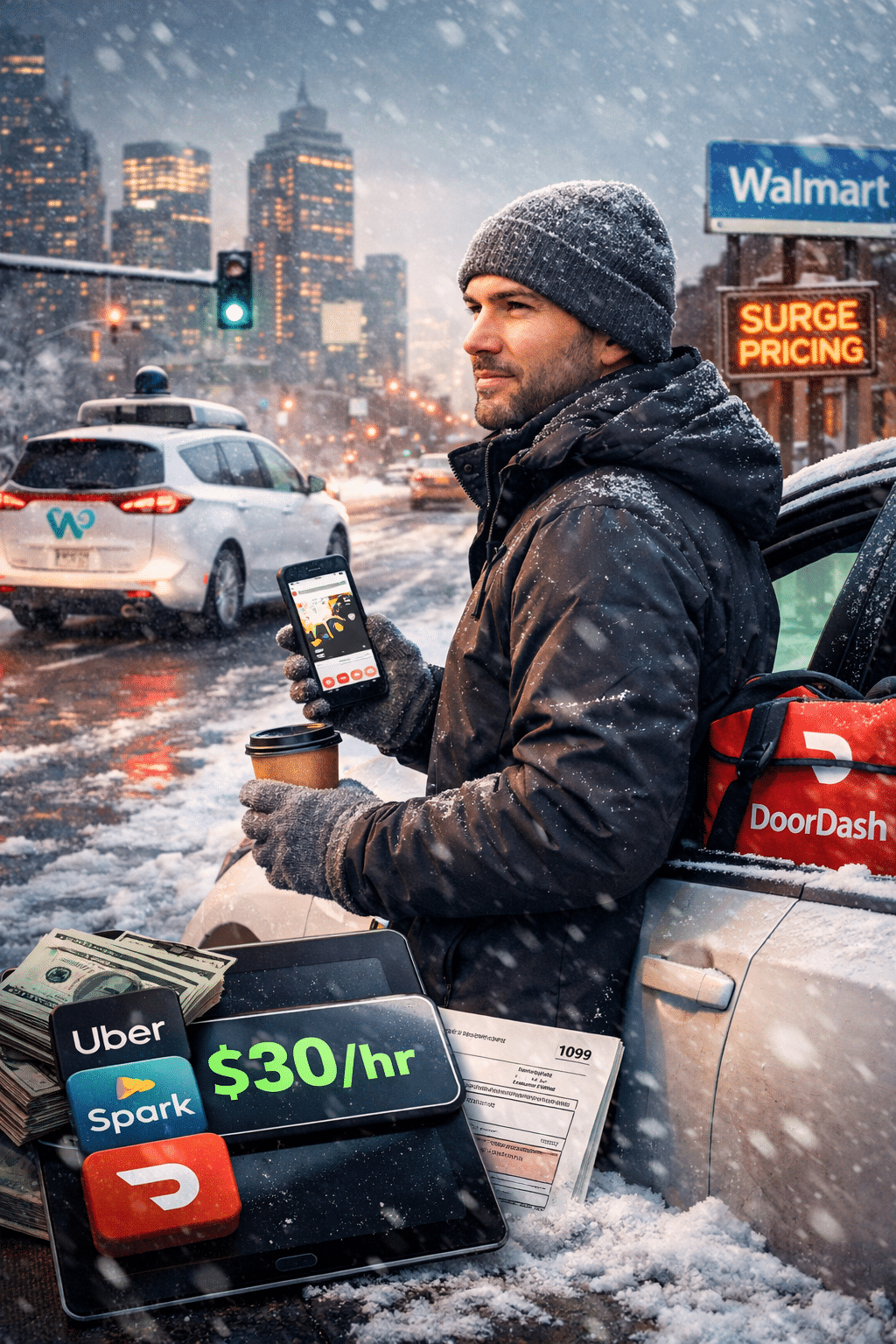
Winter set the backdrop for a wide-ranging look at gig work, from school closures and NTI policies to how drivers pivot when the world freezes up. That local chaos tied neatly into a core theme: adaptability. When weather or systems change, pros switch apps, shift hours, and choose safer routes rather than fight the tide. We walked through how daytime rides reduce drama and risk, how not to deadhead after a downtown drop, and why waiting 10 minutes in a hot zone can beat driving back empty. That small mindset shift saves time and fuel, boosting effective hourly earnings without adding stress. It also reframes slow days: you’re not stuck, you’re staging.
Payouts and platforms were next. Dovetail’s pay-for-screenshots program shut down, reminding everyone that “easy money” rarely lasts. Meanwhile Spark dangled curbside incentives that didn’t always post, reinforcing a rule: treat incentives like a bonus, not a plan. We compared short rides with strong tips against longer runs with weak add-ons and highlighted a north star for new drivers—track hourly rate across all apps, not just per-trip payouts. When you do accept a trip, treat surge and location like multipliers and skip the gut feel. Data-led choices keep you near $30 per hour more often than not.
Regulation and taxes added another layer. Platforms are splitting tips on tax statements, but guidance lags. We talked accountants, ambiguous letters, and why waiting for clarity can prevent double-taxing. Compliance cropped up again with DoorDash’s healthcare routes and Walmart’s alcohol rules, where training and certifications actually protect you. The short take: if you’re a business owner, invest in credentials that unlock higher-paying categories. The upside is more offers, less idle time, and fewer account flags.
Autonomy stole attention with Waymo’s two storylines: a low-speed child impact where braking likely beat human reaction, and a clip of a Waymo squeezing around a semi, creating a risky block. Both moments underline the transition we’re living through. Computers react faster, but they still make social mistakes. For rideshare drivers, autonomy won’t erase work soon; it will change it. Expect more value in human judgment, customer care, and edge-case handling. Meanwhile, a study shows Waymo prices sliding closer to Uber and Lyft as human rides tick up, hinting at a market where convenience and wait times decide more than novelty.
Safety and rider management rounded out the show with a tense canceled-ride standoff. Our framework: stop the car, unbuckle, secure your keys, de-escalate with clear insurance language, and call police if threatened. Never accept post-ride cash; if you must help, require immediate digital payment and still weigh the risk. Viral clips of angry couriers fueled a final point: doorbell cameras record everything. Keep your cool, even when weather, workload, or policy whiplash wears you down. The sustainable play is professionalism plus strict boundaries.
Finally, Walmart Spark’s metrics reset and tier chatter felt like a breather. Acceptance rate vanished, quantity found got simpler, and customer ratings matter more than raw acceptance. That’s healthy. It rewards accuracy, punctuality, and service over blind obedience. Across apps and seasons, the pattern holds: measure what you can control, diversify platforms, and protect your energy. The gig economy isn’t going away—it’s evolving. Drivers who treat it like a business will keep winning as the rules change.

by Jason Tieri | Feb 9, 2026 | Podcasts
Everything Gig Economy Podcast Related: https://gigeconomyshow.com/
Download the Audio Podcast: https://thegigeconomypodcast.buzzsprout.com
Love the show? You now have the opportunity to support the show with some great rewards by becoming a Patron. Tier #2 we offer free merch, an Extra in-depth podcast per month, and an NSFW pre-show https://www.patreon.com/thegigeconpodcast
Octopus is a mobile entertainment tablet for your riders. Earn 100.00 per month for having the tablet in your car! No cost for the driver!
https://playoctopus.page.link/HD2FBKJzFqRR35YE9
The Gig Economy Podcast Group Download Telegram 1st, then click on the link to join. https://t.me/joinchat/R42wUR2QGhCi2gBD
TikTok: https://www.tiktok.com/@gigeconomypodcast?
Subscribe on Youtube https://www.youtube.com/channel/UCK_bV7j7o1BzWtB4mt_4R8Q?view_as=subscriber
This podcast is produced by Hey Guys Media Group LLC http://www.heyguysmediagroup.com
Want to start your own podcast? Reach out to them today!
by Jason Tieri | Feb 2, 2026 | Podcasts
Everything Gig Economy Podcast Related: https://gigeconomyshow.com/
Download the Audio Podcast: https://thegigeconomypodcast.buzzsprout.com
Love the show? You now have the opportunity to support the show with some great rewards by becoming a Patron. Tier #2 we offer free merch, an Extra in-depth podcast per month, and an NSFW pre-show https://www.patreon.com/thegigeconpodcast
Octopus is a mobile entertainment tablet for your riders. Earn 100.00 per month for having the tablet in your car! No cost for the driver!
https://playoctopus.page.link/HD2FBKJzFqRR35YE9
The Gig Economy Podcast Group Download Telegram 1st, then click on the link to join. https://t.me/joinchat/R42wUR2QGhCi2gBD
TikTok: https://www.tiktok.com/@gigeconomypodcast?
Subscribe on Youtube https://www.youtube.com/channel/UCK_bV7j7o1BzWtB4mt_4R8Q?view_as=subscriber
This podcast is produced by Hey Guys Media Group LLC http://www.heyguysmediagroup.com
Want to start your own podcast? Reach out to them today!
by Jason Tieri | Feb 1, 2026 | Blog
Download the Audio Podcast!
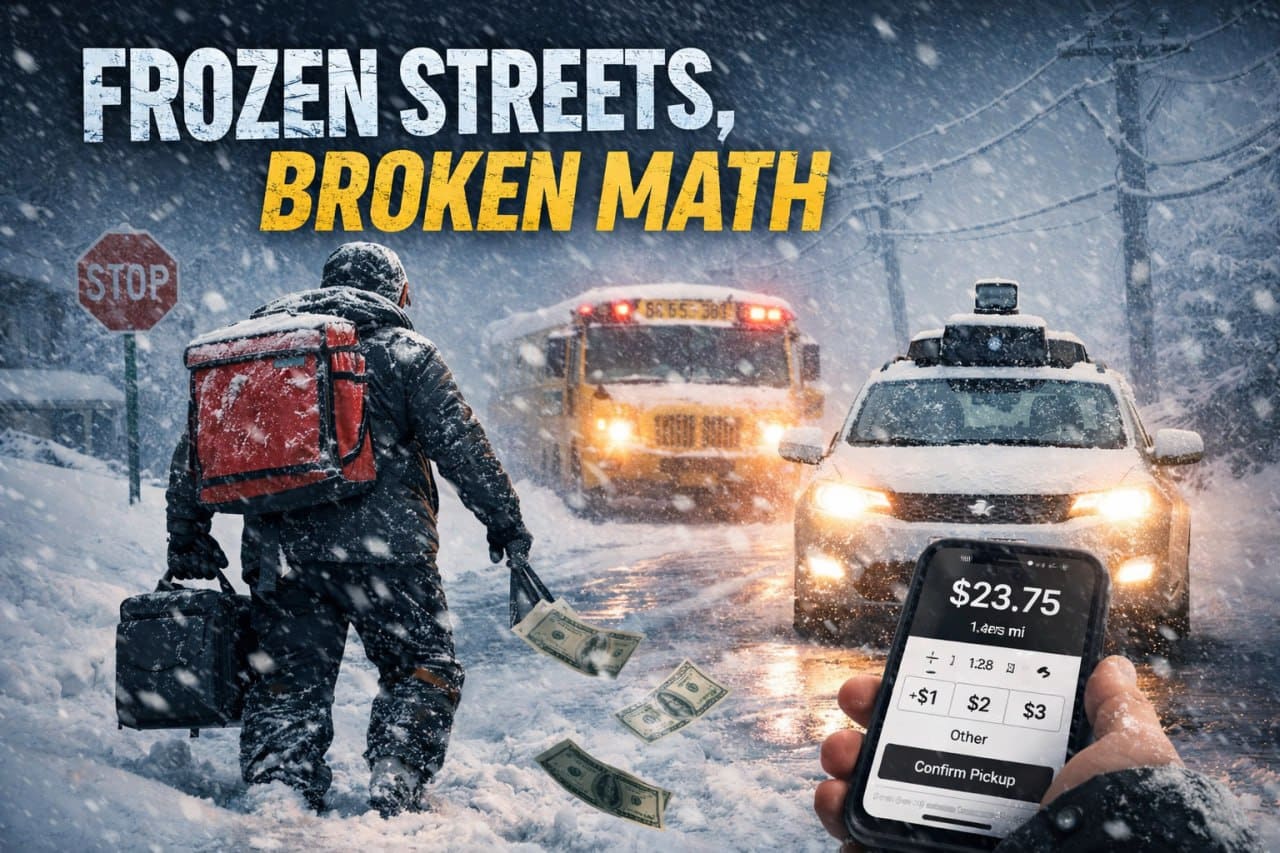
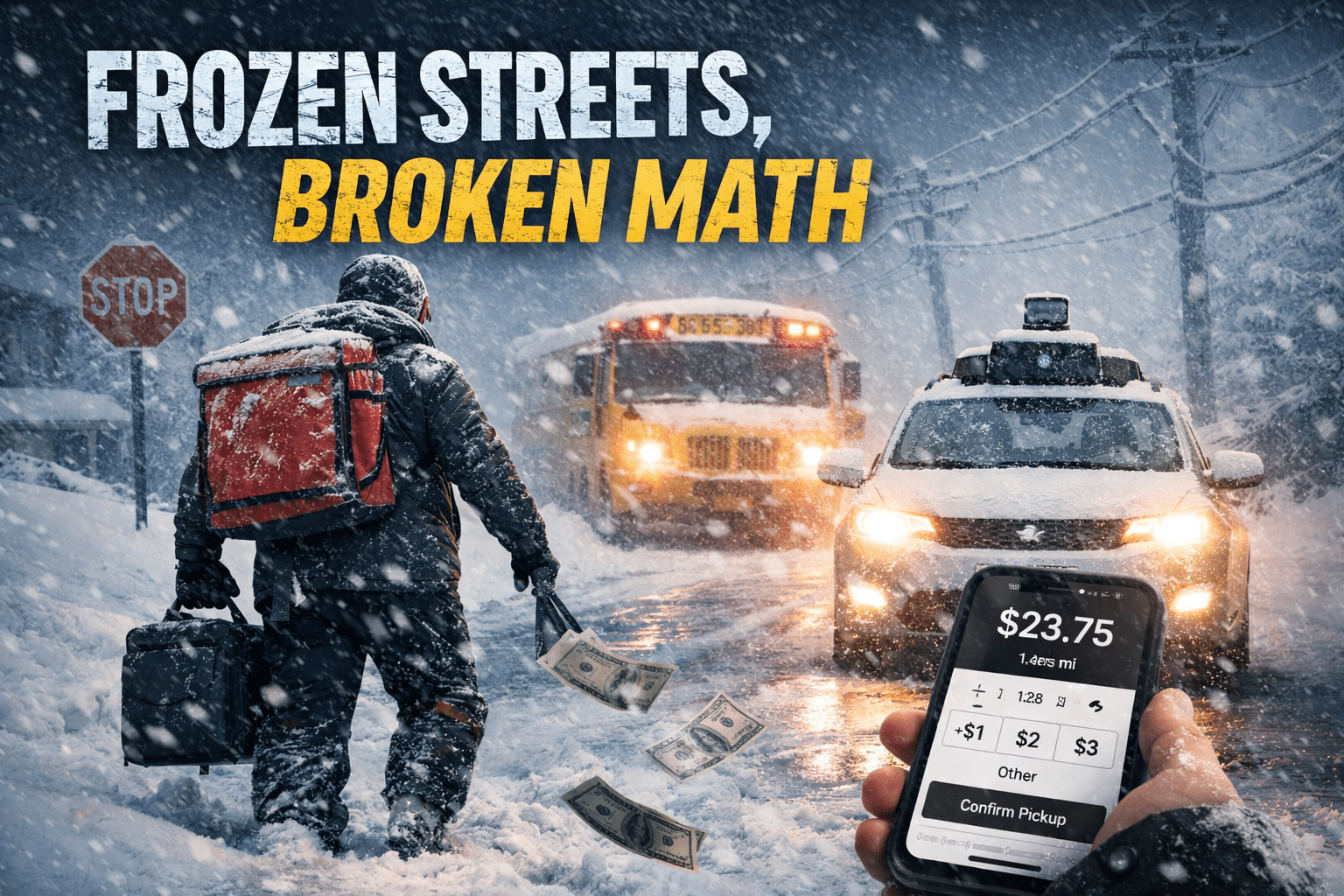
When winter locks down roads and routines, gig work doesn’t stop—it mutates. This episode dives into what happens when a deep freeze collides with delivery apps, driver safety, and policy shifts that ripple across markets. We open with a region-wide ice event that stranded families for days and flattened demand midweek, then spiked it on clearer weekends. That weather window illuminates a harsh truth: drivers who plan for downtime and gear for storms can choose when to work; those who don’t feel forced into risky shifts for modest bonuses. The storm becomes a backdrop for bigger questions about sustainability, personal safety, and the invisible costs of staying on the road when everything else shuts down.
From there we pivot to taxes and the messy reality of platform reporting. Despite political talk of not taxing tips, many 1099s still lump tips into total earnings, leaving drivers without a clean way to claim distinctions unless apps provide detailed summaries. Uber’s annual tax summary breaks out tips, while others—Lyft, Spark, and frequently DoorDash—often don’t. That inconsistency fuels a larger debate about transparency: if platforms expect contractors to manage complex taxes, expenses, and compliance, the data must be precise, consistent, and easily exportable. For gig workers, keeping thorough records, capturing mileage, and bookmarking annual summaries is no longer optional; it’s how you keep money in your pocket.
Transparency shows up again in New York City, where a court let stand a law requiring apps to recommend a minimum 10% tip and to present clear tipping options. The platforms warned about speech rights and business harm; the court disagreed. The real impact is market design: when apps must spotlight tipping while also paying local minimums, the old math of low base pay plus hidden tips breaks. In high-cost cities, guarantees sound great, but they often coexist with scheduling, quotas, or slower markets. If you don’t drive there, it’s tempting to cheer new mandates. If you do, you watch how each rule shifts availability, pay floors, and the fine print that changes your day.
Autonomous vehicles threw more questions on the pile. Reports from Austin show Waymo cars allegedly passing active school bus stop arms even after a software “fix,” with dozens of flagged incidents and kids in frame. Another clip shows a Waymo nearly colliding as it pulls from the curb right into traffic. It’s a reminder that scaling robotaxis requires mastering edge cases humans consider basic: stop arms, blind spots, and courtesy pauses. AV backers tout millions of safe miles; critics point to a single near-miss that erodes public trust. For gig drivers who see autonomy as competition, these failures are a reprieve. For cities, they’re a liability problem waiting to hit court dockets.
Meanwhile, Amazon is recalibrating retail. With Go and some Fresh locations shrinking while Whole Foods and delivery expand, a new “big box” concept raises eyebrows. Why drive to a store to buy what one-click already sends home? The only compelling answer is experience and immediacy: curated shelves that match local demand, in-store tech that speeds checkout, and integrated grocery that fulfills delivery within hours. If Amazon pairs a large-format store with fast last-mile, drivers see more predictable batches and neighborhoods get shorter ETAs. If it’s a showroom without clear utility, expect blight where big promises were made.
We closed with the human side: DoorDash shut down in icy regions and added a $2 weather fee elsewhere, prompting the usual outrage. Surge-like fees are fair when risk and time multiply, but fees alone don’t change physics. The smarter play is preparation: winter tires, basic recovery gear, waterproof boots, extra windshield fluid, and a savings buffer so “no-go days” don’t wreck your budget. And when customers don’t shovel, you can still be professional: communicate ETAs, stay safe, and decide if that no-tip order is worth a thigh-deep trudge. In gig work, transparency, planning, and boundaries are the only guarantees you can control.

by Jason Tieri | Jan 26, 2026 | Podcasts
Everything Gig Economy Podcast Related: https://gigeconomyshow.com/
Download the Audio Podcast: https://thegigeconomypodcast.buzzsprout.com
Love the show? You now have the opportunity to support the show with some great rewards by becoming a Patron. Tier #2 we offer free merch, an Extra in-depth podcast per month, and an NSFW pre-show https://www.patreon.com/thegigeconpodcast
Octopus is a mobile entertainment tablet for your riders. Earn 100.00 per month for having the tablet in your car! No cost for the driver!
https://playoctopus.page.link/HD2FBKJzFqRR35YE9
The Gig Economy Podcast Group Download Telegram 1st, then click on the link to join. https://t.me/joinchat/R42wUR2QGhCi2gBD
TikTok: https://www.tiktok.com/@gigeconomypodcast?
Subscribe on Youtube https://www.youtube.com/channel/UCK_bV7j7o1BzWtB4mt_4R8Q?view_as=subscriber
This podcast is produced by Hey Guys Media Group LLC http://www.heyguysmediagroup.com
Want to start your own podcast? Reach out to them today!